There are several ways to start a fire without matches or a lighter. They include friction, sparks, and concentrating sunlight, and each technique has its own variations. Knowing how to make a fire in the wilderness can be an important survival skill, especially when warmth, cooking, or signalling for help becomes essential.
Some methods are relatively simple, while others require practice, suitable materials, and patience. Not every technique works in every environment: solar methods need strong sunlight, and friction methods require dry materials. Here are ten traditional and improvised fire-starting techniques, along with a few popular methods that deserve a closer look.
1 A water lens made from a plastic bag, bottle, or balloon
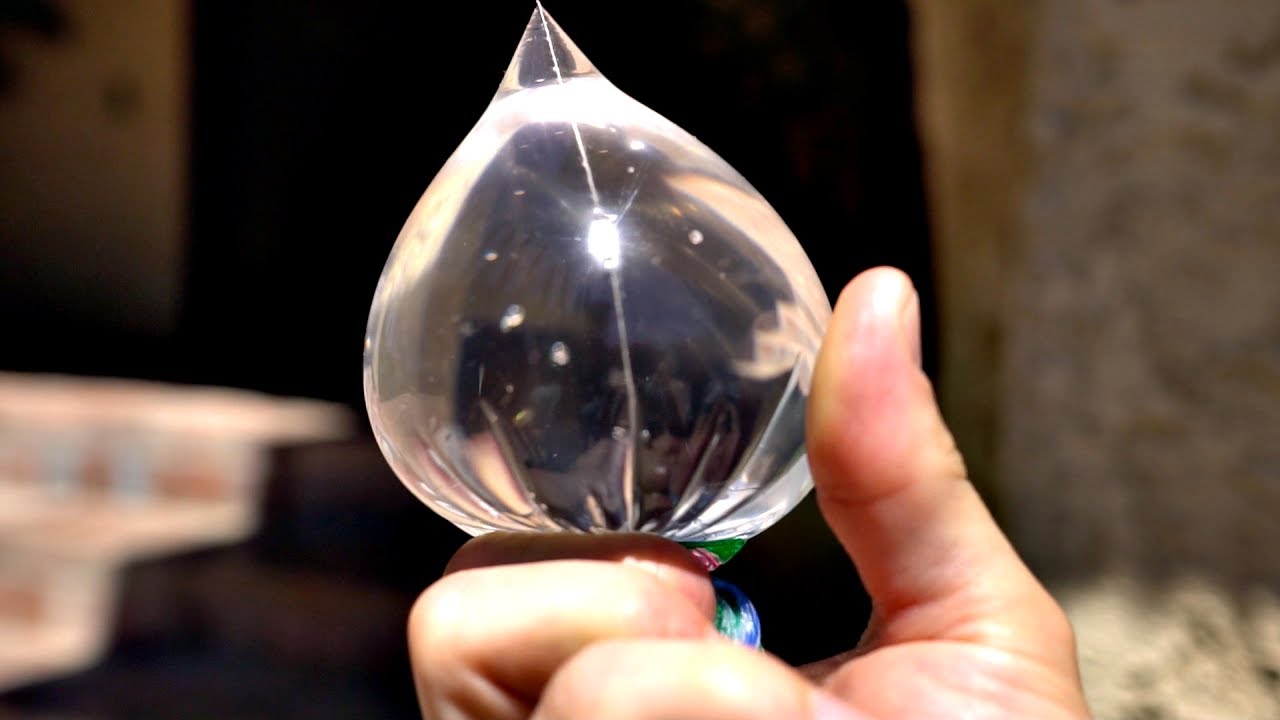
A transparent plastic bag or bottle filled with water can act as a crude lens. When shaped correctly, it can concentrate sunlight onto a small area of dry tinder. A clear water-filled balloon or similar flexible container can also work.
The key is to create a small, bright focal point and keep it steady on the same spot. This method only works in direct sunlight and can take considerable time. The tinder must be extremely dry and prepared to catch a tiny ember. Never leave a water-filled plastic container in direct sunlight unattended, as concentrated sunlight can create a fire hazard.
2 A polished metal can as a reflector
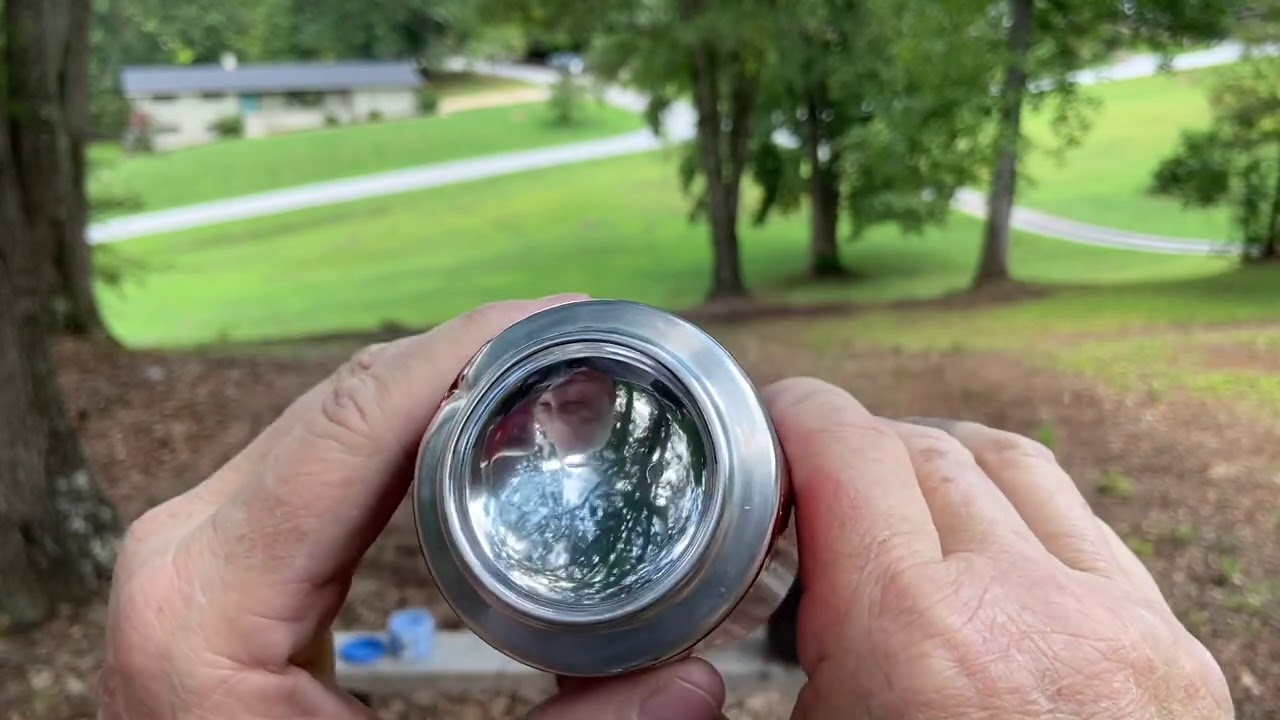
The curved bottom of some aluminium drink cans can act as a parabolic reflector. If its surface is polished until it becomes highly reflective, it may concentrate sunlight onto a small point.
The process requires patience: an ordinary can is not reflective enough, so its surface needs careful polishing. Once the reflection is sufficiently bright, the can can be aimed toward the sun, with dry tinder positioned at the focal point.
This is a genuine but rather impractical technique. It requires strong sunlight, a suitable can shape, and a very well-polished surface. Be careful when handling cut metal because its edges can be sharp.
3 A lens made from ice

In principle, clear ice can be shaped into a convex lens and used to concentrate sunlight, just like glass. The technique has also been demonstrated in survival and television experiments.
The ice must be as clear as possible, without air bubbles or cracks, and its surfaces need to be shaped smoothly. It must then be positioned so that sunlight is concentrated onto dry tinder.
Although fascinating, this is a difficult method. Making a suitable lens takes time, the ice melts while being handled, and strong direct sunlight is essential. It is best considered an experimental survival technique rather than a dependable way to start a fire.
4 A ferrocerium fire starter
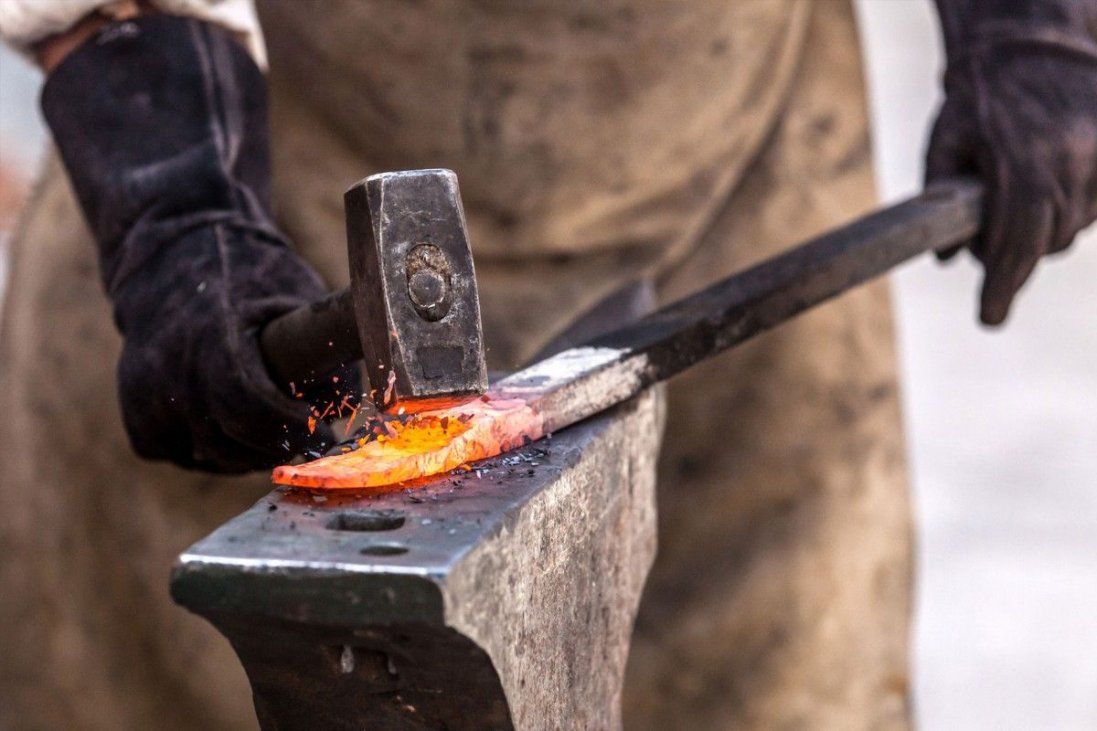
A ferrocerium rod, often called a ferro rod or fire steel, is one of the most practical alternatives to matches. When a suitable striker is scraped firmly along the rod, it produces a shower of very hot sparks.
Direct the sparks onto suitable tinder, such as specially prepared fire-starting material or very fine, dry fibres. Once the tinder begins to glow, gently encourage it to develop into a flame.
Ferro rods are compact, durable, and can produce sparks even when wet, provided the rod and tinder are prepared properly. However, they still require practice, and the sparks can ignite nearby dry vegetation accidentally. Keep them away from flammable surroundings.
5 Flint and steel
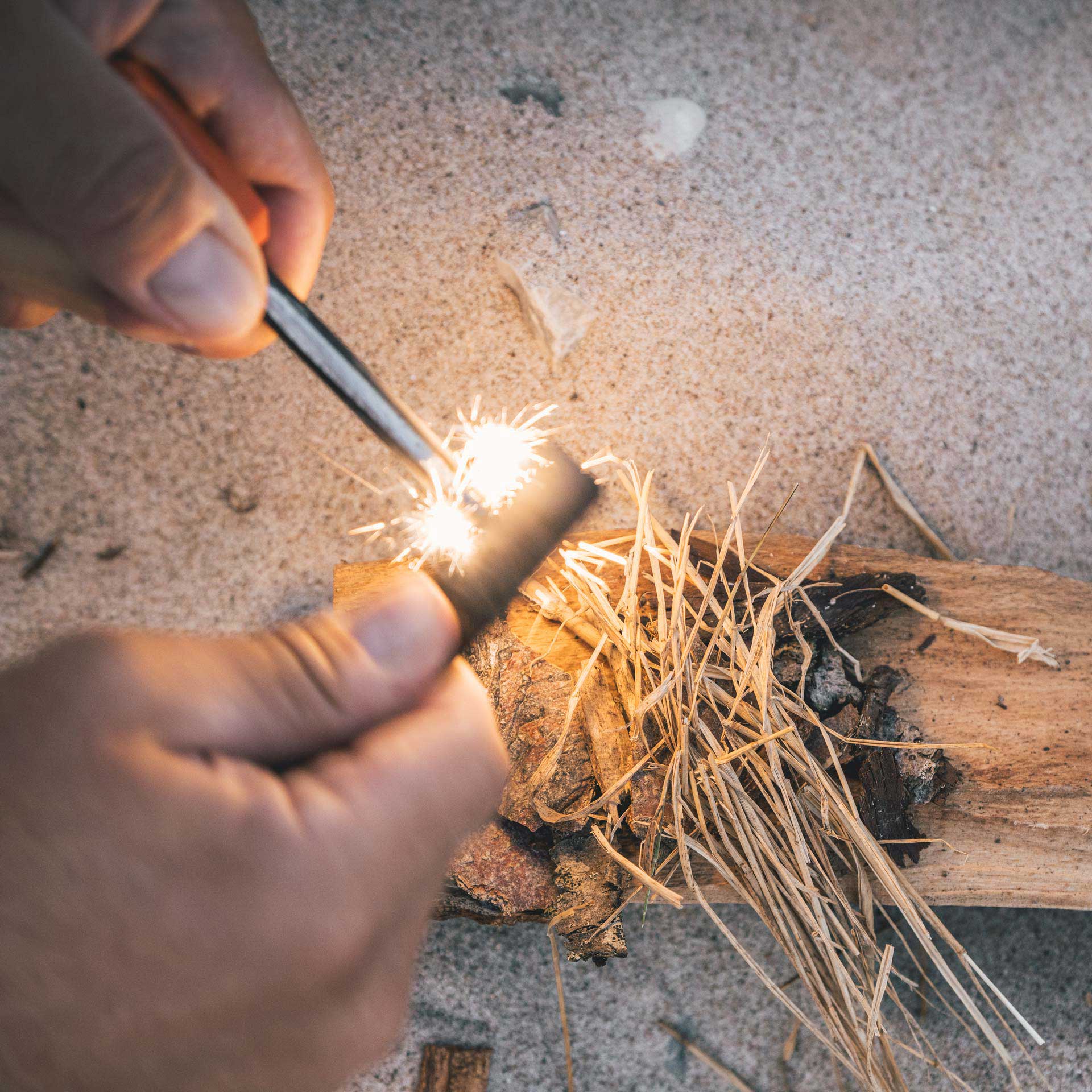
Flint and steel is one of the oldest traditional methods of starting a fire. It requires a piece of hard flint or a similar suitable stone and a high-carbon steel striker. Striking the steel against the sharp edge of the stone removes tiny particles of metal, which become hot sparks.
The sparks are directed onto char cloth or another suitable material capable of catching and holding a tiny ember. Once the material begins to glow, it can be transferred to a bundle of fine, dry tinder and gently blown into a flame.
Not every stone will work. Flint and other hard, silica-rich stones are suitable, while softer rocks generally produce poor results. Prepared tinder is essential: ordinary dry grass may not catch a small spark reliably.
6 The fire thong method
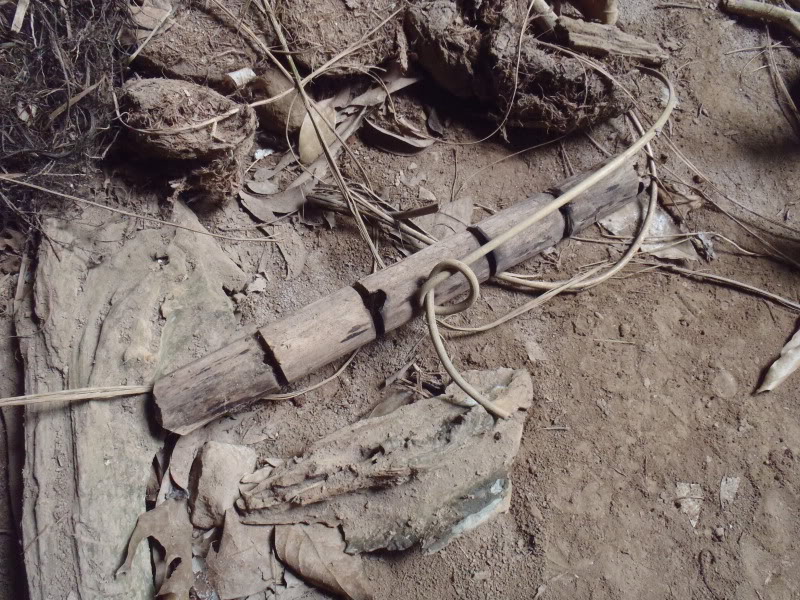
The fire thong is a traditional friction-based technique. A cord or strip of suitable natural material is pulled back and forth against a dry wooden surface, generating heat through friction.
The material must be dry, and the movement needs to be fast and consistent. With the right combination of wood, cordage, and technique, the friction can produce hot particles or an ember that can be transferred to prepared tinder.
This method requires considerable practice and is not guaranteed to work with an ordinary piece of rope. The type of wood and the material used for the thong make a significant difference.
7 Friction using cotton
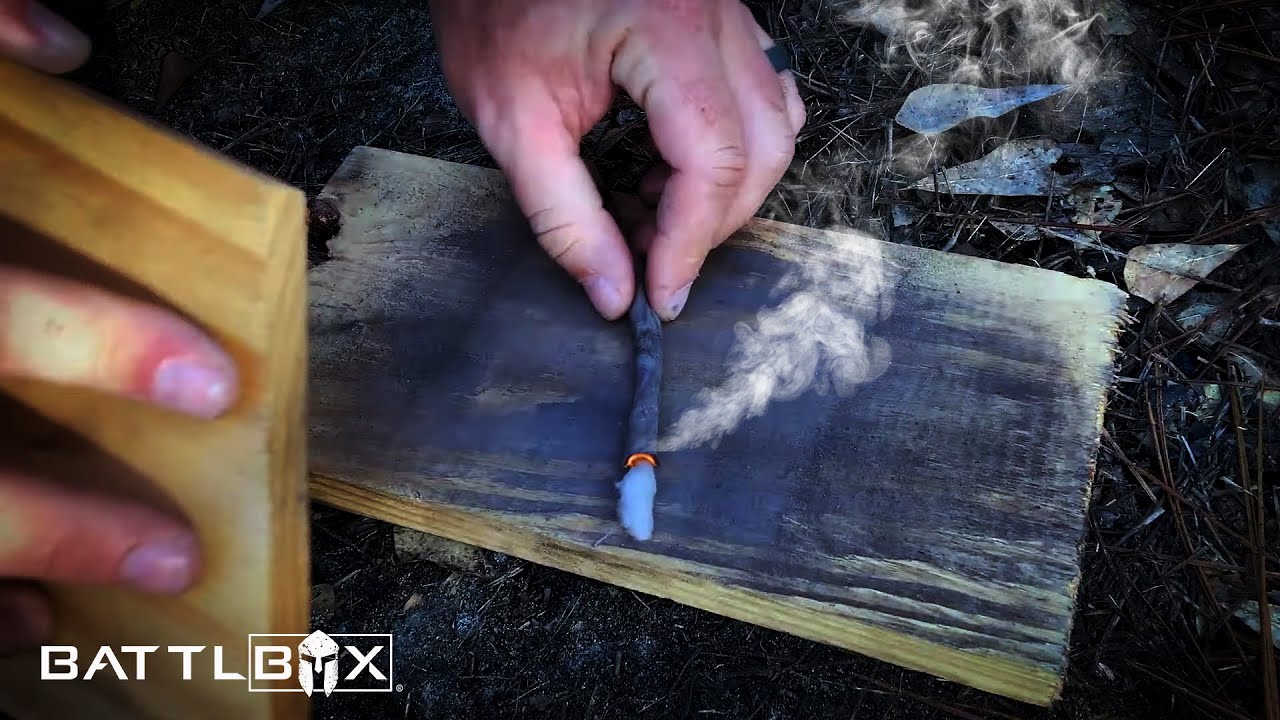
Cotton is an excellent tinder material, but simply rubbing a cotton ball between two wooden boards is not a dependable way to create an ember. Stories about producing fire this way are difficult to verify and should not be treated as a reliable survival technique.
Dry cotton fibres can, however, help a fire catch once they receive enough heat from a spark or ember. They can be used as part of a tinder bundle, provided they are clean and completely dry.
For a practical alternative, prepare cotton tinder in advance and use it with a ferro rod or flint and steel. The important distinction is that cotton helps a fire catch; friction between two ordinary boards does not automatically make it ignite.
8 The fire plough method
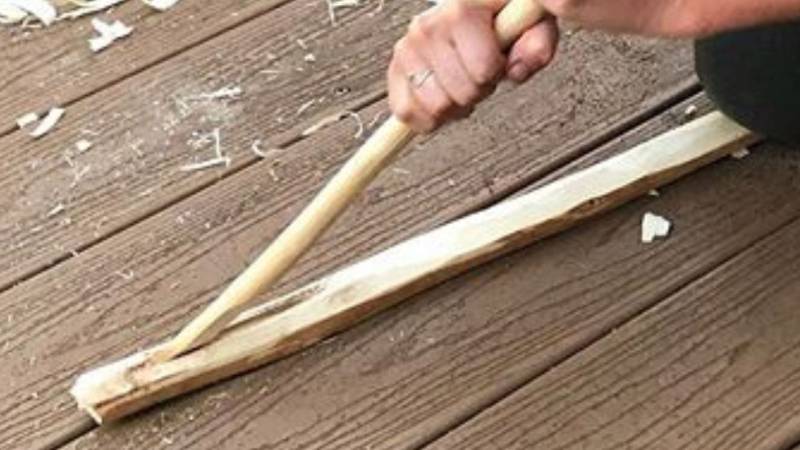
The fire plough is a traditional friction technique that uses two pieces of dry wood. A straight groove is made in a softwood board, and a harder wooden stick is repeatedly pushed back and forth along it.
The pressure and movement generate heat and produce fine wood dust. With suitable wood and enough friction, the dust can become hot enough to form a glowing ember.
This ember is then transferred carefully into a prepared tinder bundle and gently blown until it develops into a flame. The method requires dry wood, the right combination of materials, and consistent pressure. It can take considerable practice before it works reliably.
9 The bow drill method
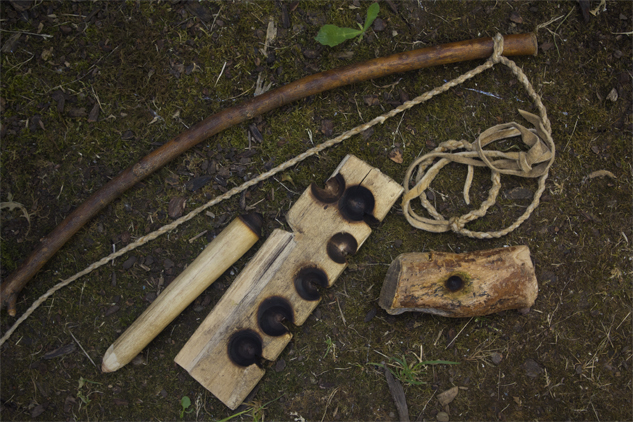
The bow drill is one of the best-known traditional friction methods. It consists of a wooden base, a spindle, a bow with a cord, and a handhold that applies pressure to the top of the spindle.
The cord is wrapped around the spindle, allowing the bow to rotate it rapidly against the wooden base. Friction produces fine wood dust, which gradually heats up and can form a glowing ember.
The ember is collected in a prepared notch or depression and transferred to a dry tinder bundle. Gentle blowing helps it develop into a flame.
The choice of wood is important. Both pieces should be dry, and the combination must produce enough friction without simply wearing away. The bow drill is effective in experienced hands, but it takes practice and should not be assumed to work immediately.
10 The potato battery: an internet survival myth
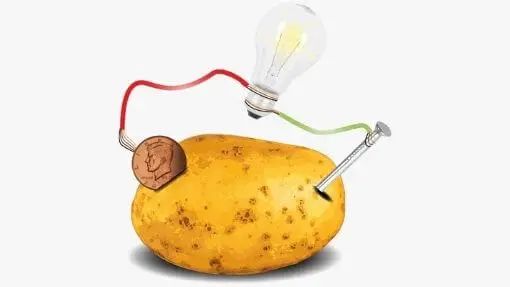
You may have seen demonstrations claiming that a potato, salt, toothpaste, and two wires can be used to generate enough electricity to start a fire.
A potato can indeed be part of a simple battery experiment, but the usual demonstration requires two different metals, such as copper and zinc, to produce a small electrical voltage. A single potato does not store electricity, and the arrangement described in many viral instructions does not provide a reliable source of ignition.
Even a properly constructed potato battery produces very little current. It is not a practical way to generate the hot spark needed to ignite tinder. The method should therefore be treated as a science experiment, not a survival technique.
If you need an improvised electrical ignition source, a suitable battery and appropriate ignition materials are a different approach. However, a tested lighter, waterproof matches, or a ferrocerium rod are much more dependable choices.