Throughout history, governments have passed laws that seem bizarre, excessive, or downright amusing by modern standards. Some were introduced to maintain public order, others reflected religious beliefs or political anxieties, and a few addressed problems so specific that it is difficult to imagine how they became matters of legislation.
From medieval monarchs trying to control popular sports to modern governments regulating the handling of fish, unusual laws reveal a great deal about the societies that created them. Not every strange law found on the internet is genuine, however: many popular examples are urban legends, while others were real laws that have since been repealed.
Here are 10 of the strangest laws and legal rules in history, from different countries and periods. Some are no longer in force, but their stories remain fascinating.
1 The ancient Greek island where dying was forbidden

In ancient Greece, the island of Delos was considered sacred because of its association with Apollo and Artemis. Religious authorities sought to preserve its purity, and historical accounts describe measures intended to prevent births and deaths on the island. Graves were also removed as part of religious purification. The aim was not to punish people for dying but to ensure that the sacred sanctuary remained ritually pure. The story is often summarized as a law making death illegal, although the actual restrictions were rooted in religious practice rather than a modern criminal statute. It is a striking example of how religious beliefs once shaped everyday life.
2 The medieval English ban on wearing armor in Parliament

In 1313, during the reign of Edward II, England passed the Statute of Northampton, which restricted the wearing of armor and the carrying of weapons in certain public settings without the king’s permission. The legislation formed part of broader efforts to control armed gatherings and political intimidation. A related restriction is commonly associated with the wearing of armor in Parliament. Today, the idea of a law specifically addressing armored members of Parliament sounds almost comical, but in a period when nobles could arrive armed and political disputes sometimes turned violent, such measures had a practical purpose. The exact legal history is more complicated than the familiar one-line version suggests.
3 The beard tax of Peter the Great

In 1698, Russian ruler Peter the Great introduced measures to encourage men at court to adopt Western European fashions, including shaving their beards. In 1705, a more formal beard tax extended the policy to various groups of men. Those who paid could receive tokens demonstrating their permission to keep their facial hair. The policy reflected Peter’s broader attempt to transform Russian society, from clothing and appearance to government and military organization. For many men, however, the beard was deeply connected with tradition and religious identity. What might seem like an absurd government obsession today was part of a much larger campaign to reshape an entire country.
4 The English law that tried to control football
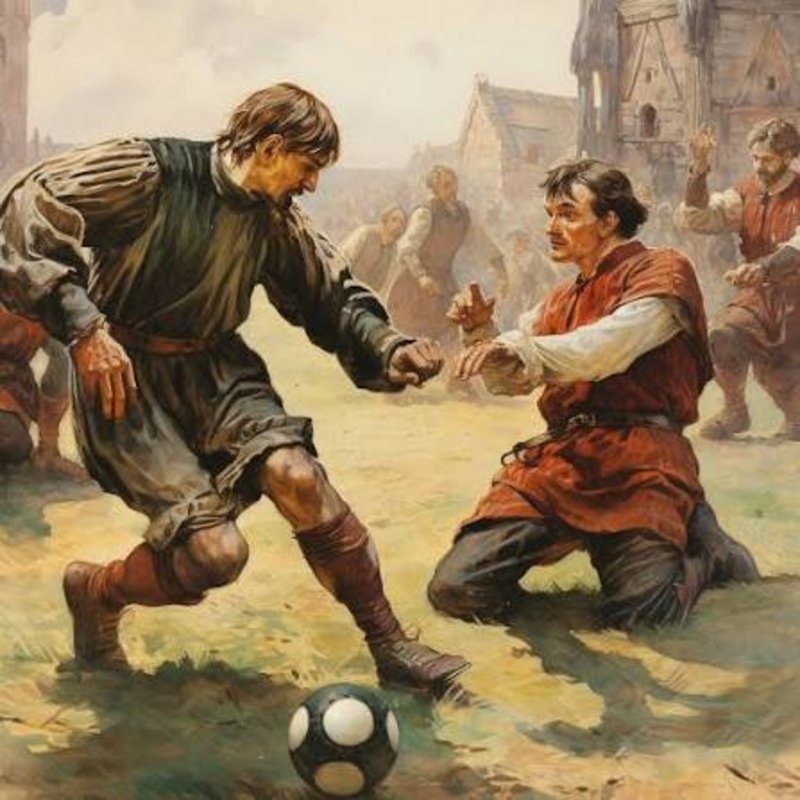
In 1314, King Edward II prohibited a form of football in London. The game played in medieval streets could involve large crowds, considerable physical violence, and disruption to trade. Authorities complained that the activity disturbed the peace and interfered with business. Later English monarchs also issued restrictions on football, partly because they wanted men to spend more time practicing archery, which was considered important for national defense. These historical bans did not resemble modern rules governing organized sports. They were attempts to control disorderly public gatherings and direct people’s leisure time toward activities the authorities considered more useful.
5 The ancient-style census that counted households instead of people

For much of history, governments struggled to determine how many people lived within their territories and how much tax they should pay. In early modern Russia, taxation was traditionally based on households, which encouraged some landowners to combine households on paper to reduce their tax obligations. In 1718, Peter the Great ordered the introduction of a population-based tax system that required a census of male taxpayers. The process was complicated and took years to implement. Although a population census may not sound like a strange law today, changing the basis of taxation from households to individual people was a major administrative transformation. It also shows how attempts to make government more efficient could create new burdens for ordinary citizens.
6 The Michigan law against swearing in front of women and children
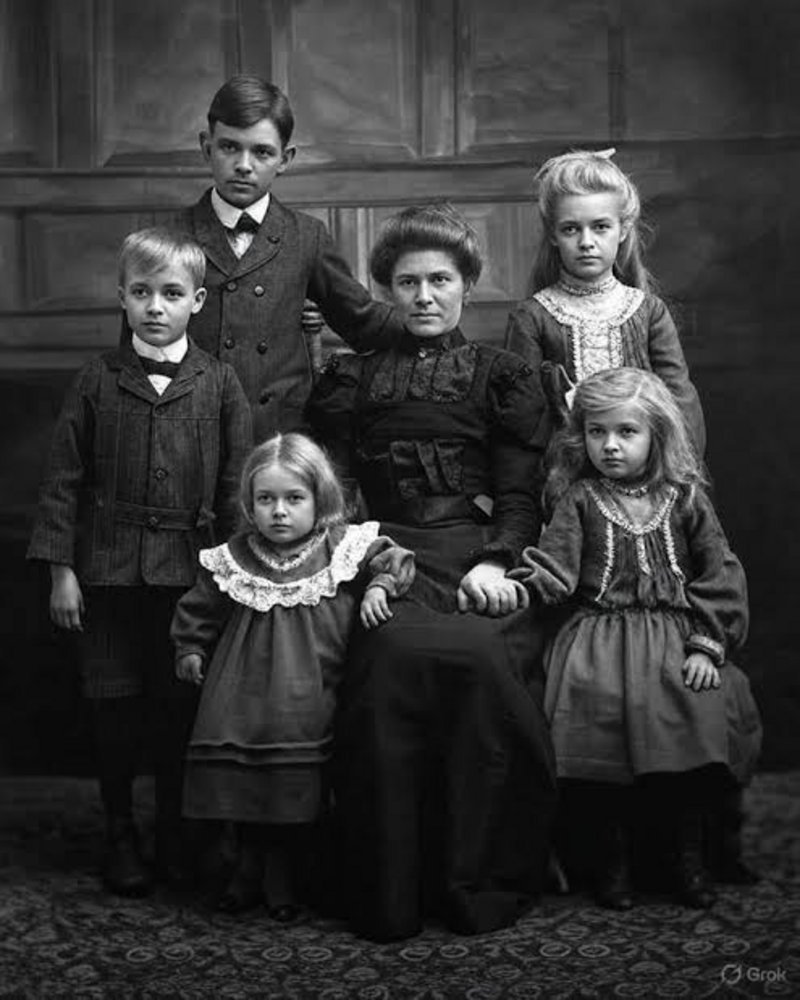
Michigan once had a law dating from 1897 that prohibited certain forms of indecent, vulgar, or insulting language in the presence or hearing of women and children. The provision remained on the books for more than a century. In 1998, a man named Timothy Boomer was cited after swearing when he fell out of his canoe on a river where a family with children was nearby. He was convicted in 1999, but the Michigan Court of Appeals overturned the conviction in 2002, finding the law unconstitutionally vague. The state eventually repealed the provision in 2015. The case illustrates how an old law intended to enforce public decency can become difficult to reconcile with modern protections for freedom of speech.
7 The ban on Christmas celebrations in England

In 1644, Christmas Day fell on a day of fasting under the English parliamentary calendar, and Christmas festivities were restricted during the period of Puritan influence. After the monarchy was abolished, the authorities under Oliver Cromwell continued efforts to discourage traditional Christmas celebrations. These measures were connected with religious objections to what Puritans regarded as excessive or unbiblical festivities. Stories that mince pies were completely outlawed throughout the entire Cromwell period are often exaggerated, however, and some proposed restrictions never became law. When the monarchy was restored in 1660, traditional Christmas celebrations gradually returned. The episode shows how religious and political conflict could extend into people’s homes and holiday customs.
8 The historical restriction on making oak coffins

In 1723, Peter the Great’s government introduced a restriction on the use of expensive materials, including oak, for coffins. The measure is often described as a ban on oak coffins intended to conserve valuable timber. Wood was an important strategic resource in an era when shipbuilding consumed enormous quantities of timber, and the Russian state was investing heavily in its navy. However, the specific story is repeated in historical summaries with limited detail about the decree’s exact wording and practical enforcement. It is best understood in the broader context of government efforts to manage resources and control consumption rather than as proof that every oak coffin was universally prohibited in every circumstance.
9 The British law against handling salmon suspiciously

One of Britain’s strangest-sounding modern laws is found in the Salmon Act 1986. Section 32 addresses the handling of salmon in suspicious circumstances. Despite the wording that frequently appears in lists of bizarre laws, the provision is not a prohibition on behaving strangely around fish. It concerns circumstances that may indicate illegal fishing, handling, or trading. The law was designed to help authorities tackle offences involving salmon and other regulated fish. Its memorable wording has made it a favorite example of supposedly ridiculous British legislation, but its purpose is entirely practical: preventing illegal activity involving fish stocks and their sale.
10 The law against accepting bribes in public office

Corruption is hardly a modern problem. Governments throughout history have tried to stop officials from accepting money or favors in exchange for preferential treatment. In 1714, Peter the Great issued measures restricting officials from accepting certain payments, gifts, and private contracts connected with their public duties. Such rules were intended to ensure that state employees relied on their official salaries rather than using their positions for personal enrichment. Enforcement was difficult, however, because corruption was deeply embedded in many administrative systems. The broader lesson is that even the most forceful anti-corruption laws can achieve little without effective oversight, independent enforcement, and consequences for officials who abuse their authority.
Strange laws are often more than amusing historical curiosities. They reveal what governments feared, which traditions they wanted to preserve, and how far rulers were willing to go to influence everyday behavior. Some were introduced to address genuine problems, while others reflected the political and religious assumptions of their time. And perhaps the strangest thing of all is that laws originally created for very practical reasons can sound almost unbelievable centuries later.