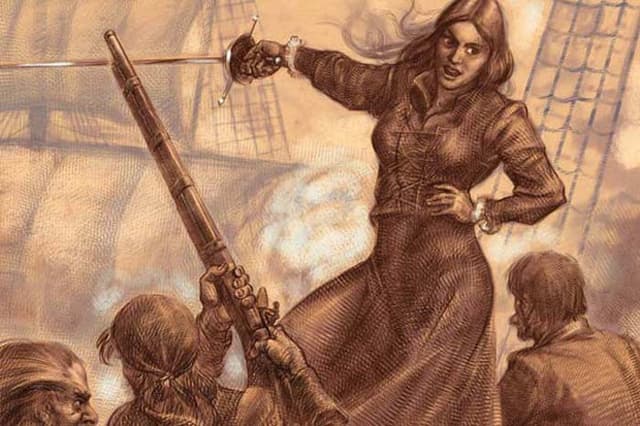
Amphitheater – a structure for holding gladiatorial games and battles for the entertainment of the public. It is believed that gladiatorial games were borrowed from the Etruscans as a funeral ritual, where people selected for human sacrifices would battle each other, and the strongest would survive.
The first such structures were called “Spectacula,” and the term “amphitheater” became more common later. Under the influence of Christianity, gladiatorial games were banned, arenas were abandoned, and they transformed into monuments. Some of the surviving amphitheaters are now used for concerts.
So, here are the Top 10 Largest Roman Amphitheaters:
1Colosseum, 189 x 156 m

Of course, the Colosseum is the largest amphitheater, located in Rome, Italy. It is the most famous of all surviving Ancient Roman structures.
2Capua Amphitheater, 167 x 137 m

The Capua Amphitheater is the second-largest after the Colosseum. It is located in the city of Capua, Italy. The outer perimeter of the arena was lined with smooth and carved stones. Almost all of the ornamentation has been destroyed except for Hercules and the image of Venus.
3Italica Amphitheater, 157 x 134 m

The Italica Amphitheater is a ruined Roman amphitheater located in the Roman settlement of Italica, now the city of Santiponce in Andalusia, Spain.
4Tour Amphitheater, 156 x 134 m

The Tour Amphitheater is a Roman amphitheater located in the historic center of Turin, France. It was built in the 1st century when the city was known as Caesarodunum.
5Carthage Amphitheater, 156 x 128 m

The Carthage Amphitheater is a Roman amphitheater located in the city of Carthage in Tunisia. Its capacity is estimated at 30,000 seats. It is now a suburb of Tunis.
6Verona Arena, 152 x 123 m

The Verona Arena is an ancient Roman amphitheater built in Verona, Italy, around 30 years BCE. Today, the Verona Arena is a globally renowned venue for concerts.
7El Djem Amphitheater, 148 x 122 m

The El Djem Amphitheater is a Roman amphitheater built in the image of the Roman Colosseum by the African consul Gordian in Thysdrus between 232 and 238 AD, now the town of El Djem, Tunisia.
8Flavian Amphitheater in Pozzuoli, 147 x 117 m

The Flavian Amphitheater in Pozzuoli is an ancient amphitheater in the city of Pozzuoli, Italy. It is the third-largest Roman amphitheater in Italy, after the Colosseum and the Capua Amphitheater.
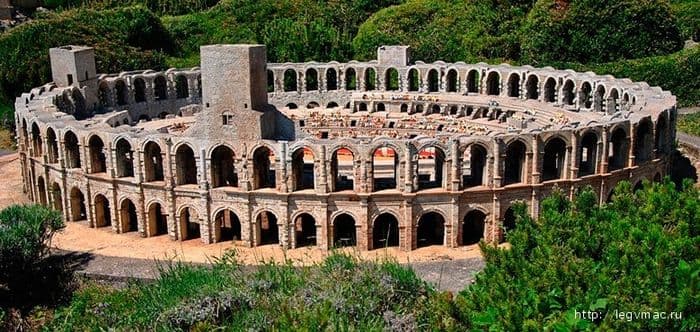
9Arles Amphitheater, 136 x 109 m

The Arles Amphitheater is a Roman amphitheater built at the end of the 1st century AD during the expansion of the city under the Flavians. It can accommodate more than 20,000 spectators.
10Pompeii Amphitheater, 135 x 104 m

The Pompeii Amphitheater is the oldest surviving Roman amphitheater in the world, built in 70 BCE.