The Concorde was more than an airliner. It was a technological statement: a passenger aircraft that could cross the Atlantic at twice the speed of sound, fly at around 60,000 feet and turn a seven- to eight-hour London–New York journey into roughly three and a half hours.
For 27 years, Concorde was one of only two supersonic airliners to carry passengers on scheduled services, the other being the Soviet Tu-144. More than 2.5 million passengers experienced supersonic flight aboard Concorde before the aircraft was retired in 2003.
The aircraft was the result of an extraordinary Anglo-French engineering partnership between the British Aircraft Corporation (BAC) and France’s Sud Aviation. Its four Olympus 593 engines were developed jointly by Rolls-Royce and SNECMA.
Only 20 Concordes were ever built. Fourteen production aircraft entered commercial airline service, seven with British Airways and seven with Air France.
1 Concorde flew at more than twice the speed of sound
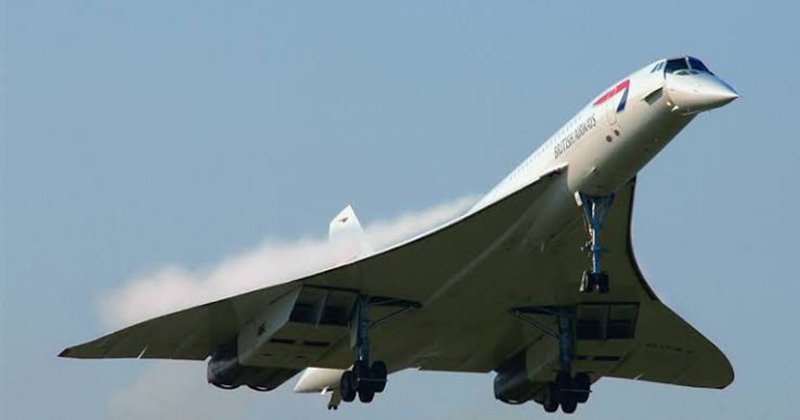
Concorde cruised at approximately Mach 2.04 — around 2,180 km/h — at an altitude of roughly 60,000 feet. It was so fast that the aircraft crossed the Atlantic in a fraction of the time required by conventional airliners.
But speed came with a price: aerodynamic heating. At Mach 2, the aluminum skin became extremely hot, reaching more than 120°C in flight. The heating caused the airframe to expand noticeably. British Airways records that Concorde stretched by approximately 6–10 inches (15–25 cm) during flight.
The aircraft’s maximum speed was limited partly by this heating. Concorde was already operating very close to the practical temperature limits of its aluminum structure.
2 Its nose actually moved
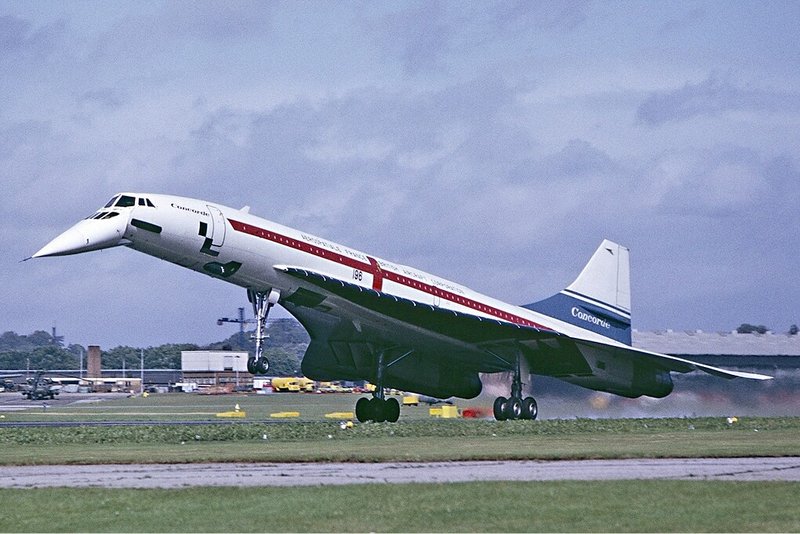
The strange-looking nose of Concorde was not just a piece of futuristic styling.
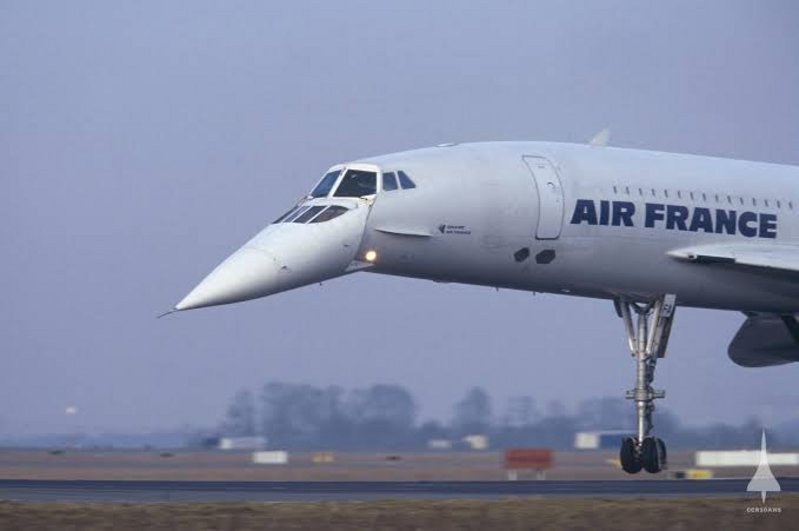
The aircraft had a hydraulically operated droop nose and visor. During takeoff and landing, the nose could be lowered to give the pilots a much better view of the runway. During high-speed flight it was raised into its streamlined position.
The visor also covered the forward cockpit windows during supersonic flight, forming part of the aerodynamic shape.
This is one of the reasons Concorde looked almost like two completely different aircraft: a sleek missile-like machine at Mach 2 and a rather peculiar bird with a lowered beak when approaching an airport.
3 Fuel was used to steer the center of gravity
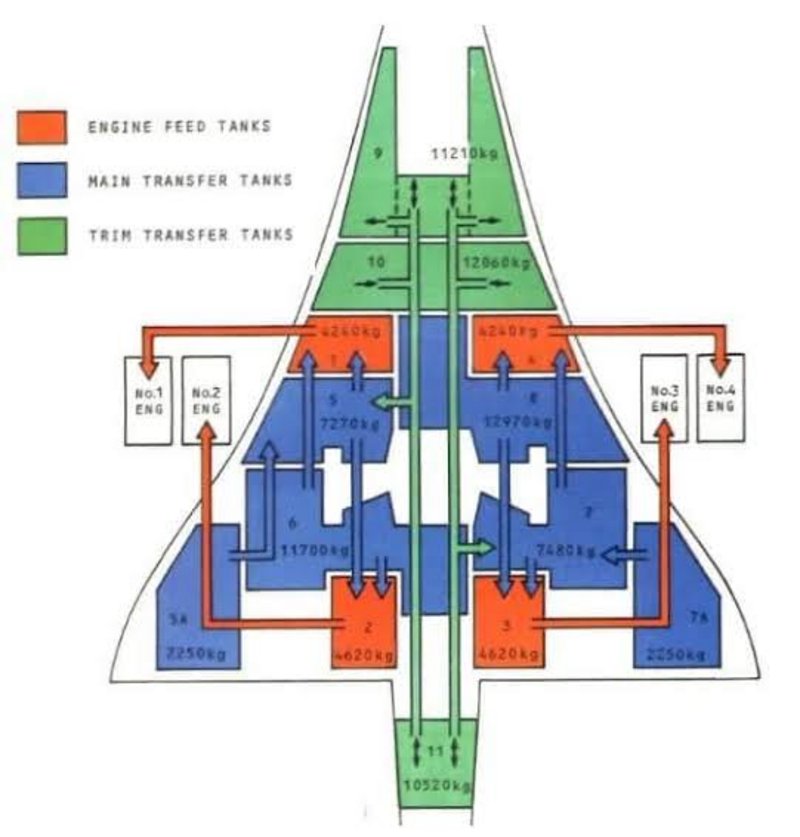
Concorde had an unusually sophisticated fuel-management system. Fuel wasn’t simply stored until the engines needed it — it was also used to keep the aircraft aerodynamically balanced.
The aircraft had 13 fuel tanks with a total capacity of approximately 119,280 litres. Fuel could be pumped between forward, main and rear trim tanks during flight.
During acceleration toward supersonic speed, roughly 20 tonnes of fuel could be transferred from forward trim tanks toward the rear of the aircraft. This shifted the center of gravity by about 2 metres, compensating for the movement of the aircraft’s center of lift at high speed.
And yes, the flight engineer was responsible for managing this remarkable balancing act.
4 It had three independent hydraulic systems

Concorde’s flight controls, landing gear, brakes, nose and many other systems depended on high-pressure hydraulics.
For redundancy, the aircraft had three independent hydraulic systems:
* Green — one of the two main systems, powered by pumps driven by engines 1 and 2.
* Blue — the second main system, powered by pumps driven by engines 3 and 4.
* Yellow — a standby system, powered by pumps driven by engines 2 and 4.
The systems normally operated at an impressive 4,000 psi. If the main systems suffered problems, the yellow system could provide backup. An emergency ram-air turbine could also provide hydraulic power following a complete engine failure.
For an aircraft carrying people across the Atlantic at Mach 2, redundancy was not optional.
5 Concorde used analogue fly-by-wire
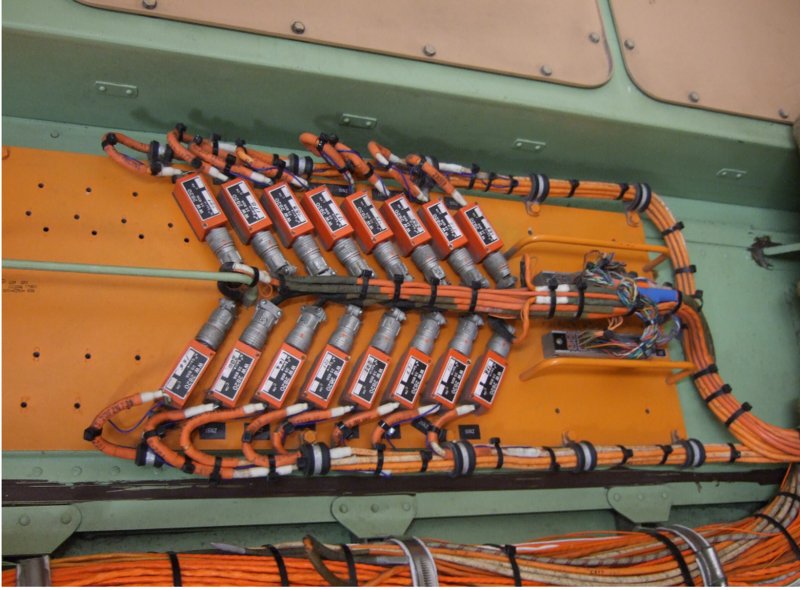
Concorde was a technological pioneer in another important area: its flight controls were fully electrically controlled analogue fly-by-wire systems. Airbus identifies Concorde as one of the early aircraft to use fly-by-wire technology.
Instead of relying on conventional mechanical connections all the way from the pilot’s controls to the control surfaces, electrical signals were used to command hydraulic-powered actuators.
However, it was not a modern digital fly-by-wire system like those found on today’s Airbus aircraft. Concorde’s system was analogue, and mechanical backup arrangements were also incorporated into the aircraft’s control architecture.
6 Dozens of airlines wanted Concorde — then almost all walked away
At one point, Concorde looked like the future of commercial aviation. In 1971, 16 airlines held options for a total of 74 aircraft.
But the dream quickly collided with economics.
The oil crisis, concerns about noise and sonic booms, the high purchase price and the emergence of large, efficient subsonic jets such as the Boeing 747 all weakened the business case for supersonic passenger travel.
By the time Concorde entered service, only British Airways and Air France became regular customers. Fourteen production aircraft eventually entered airline service — seven for each carrier.
The aircraft was heavily supported by the British and French governments, and its development became one of the most expensive aviation projects of its era. BAE Systems’ historical record puts the overall project cost at around £1.3 billion at the time.
7 Concorde could keep climbing instead of simply staying at one flight level
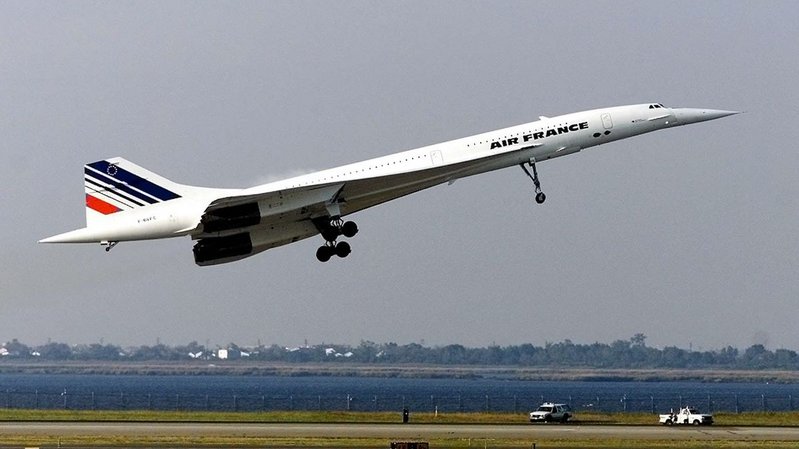
At cruising altitude, Concorde operated far above most conventional commercial traffic. As fuel was burned and the aircraft became lighter, its optimum altitude could increase.
Rather than treating cruise altitude as one fixed number for the entire flight, Concorde’s flight-management and autopilot systems could accommodate changing altitude and speed requirements during the cruise. Its automatic flight-control system was remarkably advanced for the 1970s and was designed to provide hands-off control from the climb through cruise and toward landing.
The result was a flight profile very different from that of an ordinary subsonic airliner.
8 Its autopilot could actually land the aircraft
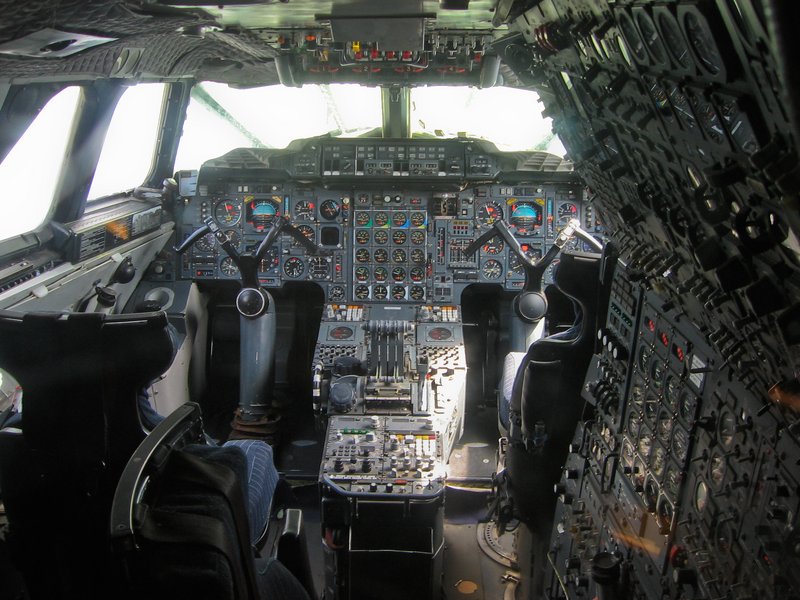
Concorde’s avionics were extraordinarily sophisticated for their time. It had an Automatic Flight Control System, autothrottle systems and an autopilot with numerous horizontal and vertical modes.
The aircraft also had an automatic landing system using the airport’s ILS guidance and radio-altimeter information. The system could support automatic approaches and landings in appropriate low-visibility conditions.
The autopilot could also follow routes using Concorde’s inertial navigation systems, allowing the aircraft to maintain its course across the Atlantic without relying on a chain of ground-based navigation beacons.
9 Concorde had only one fatal crash
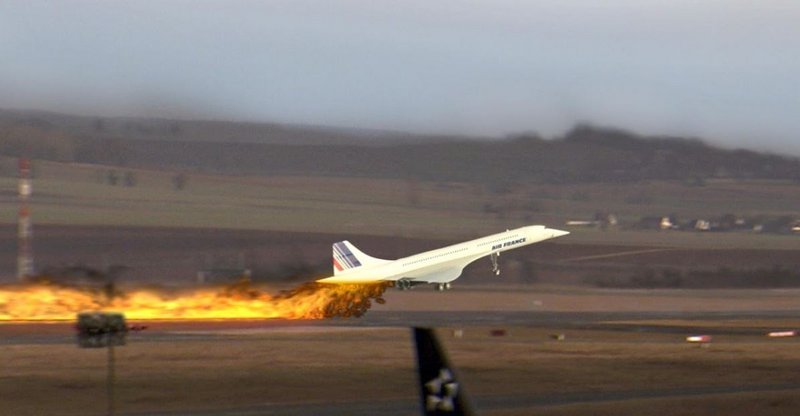
On 25 July 2000, Air France Flight 4590 crashed shortly after takeoff from Paris Charles de Gaulle Airport.
The aircraft had run over a metallic strip that had fallen from another aircraft. The debris damaged a Concorde tyre, and pieces of the tyre struck the underside of the wing and damaged a fuel tank. Fuel leaked and ignited, producing a major fire. The aircraft subsequently lost thrust and was unable to climb safely.
All 100 passengers and nine crew members on board were killed. Four people on the ground also died.
This was the only fatal crash involving a Concorde during its commercial career. The accident led to major modifications to the aircraft and its tyres, and Concorde returned to passenger service in 2001.
10 The “Concorde 2” was designed to fly at mach 5

Long after Concorde had entered history, engineers continued to explore the idea of much faster passenger aircraft.
One particularly ambitious concept was LAPCAT A2, studied by Reaction Engines as part of a European research programme coordinated through the European Space Agency.
The proposed aircraft would have used liquid hydrogen and a futuristic precooled Scimitar engine concept. The design envisioned a roughly 300-passenger aircraft capable of Mach 5, potentially flying from Brussels to Sydney in around 4.5 hours.
But there is an important catch: LAPCAT A2 was a research concept, not a production aircraft. It was never built as a passenger airliner, so calling it a direct successor to Concorde is more poetic than technical.
Why Did Concorde Finally Disappear?
Concorde’s retirement was not caused by one single problem.
The aircraft was extraordinarily expensive to operate, required specialist maintenance and had a very limited number of viable routes because of sonic-boom restrictions. The 2000 Air France crash severely damaged public confidence, and the subsequent downturn in premium air travel after September 11, 2001 further reduced demand.
Air France ended Concorde operations in May 2003, followed by British Airways in October 2003. The final Concorde flight took place in November 2003.
Today, Concorde is no longer an aircraft you can fly on — but it remains one of the most remarkable machines ever put into commercial passenger service.
More than half a century after its first flight, its combination of Mach 2 speed, a movable nose, fuel-based center-of-gravity control, analogue fly-by-wire and automatic flight systems still makes Concorde look less like an old airliner and more like a glimpse of a future that arrived too early.