The English Channel separates Great Britain from continental Europe — and for centuries it has been much more than a stretch of water on a map. It has been a playground, a challenge and an irresistible invitation to inventors, adventurers and people who apparently looked at a perfectly good boat and thought: “Surely there is a more complicated way to do this.”
People have crossed the Channel by balloon, aircraft, hovercraft, amphibious car and even under a cluster of helium balloons. Some attempts were serious engineering experiments. Others were spectacular publicity stunts. A few were simply gloriously strange.
Here are 10 of the most unusual ways people have made it across the English Channel.
1 A Balloon
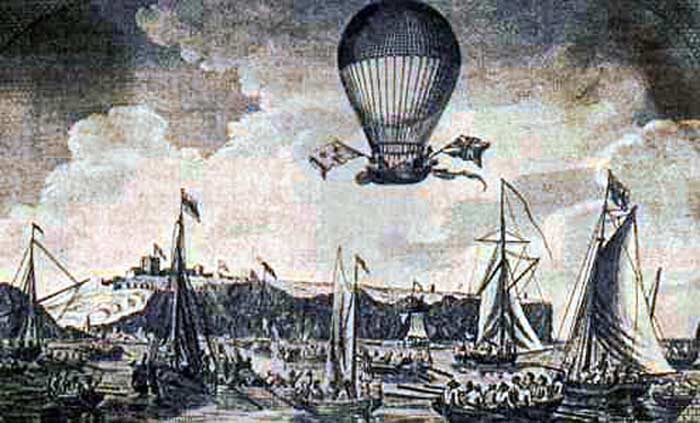
On January 7, 1785, French balloonist Jean-Pierre Blanchard and American physician John Jeffries made aviation history by becoming the first people to cross the English Channel by air.
They departed from Dover in a hydrogen-filled balloon and landed near Guînes in France after roughly two and a half hours. The flight nearly ended in disaster when the balloon began losing altitude. To make the craft lighter, the two men threw equipment and ballast overboard — and eventually even their clothes. Blanchard reportedly ended up crossing the Channel without his trousers.
For two men flying in a fragile balloon over the sea in 1785, it was an astonishing achievement.
2 A Kite-Powered Boat
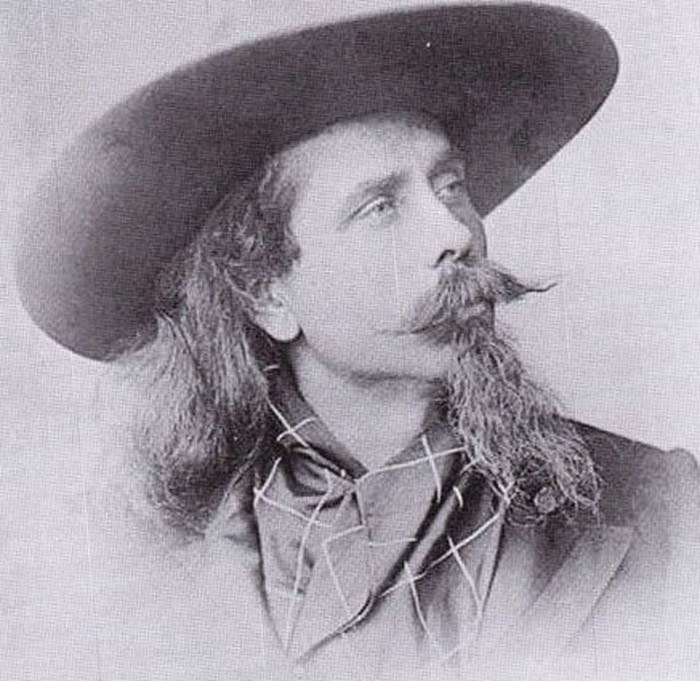
In 1903, American-born aviation pioneer Samuel Franklin Cody demonstrated that a kite could do considerably more than simply fly in the wind.
Cody crossed the English Channel in a small collapsible boat pulled by his kites. The boat was fitted with a system that allowed the kites to provide the forward pull, turning the Channel crossing into something resembling an enormous airborne sailing experiment. The successful crossing took place in November 1903 after earlier attempts had failed because of unfavorable winds.
Cody was not merely looking for a bizarre way to cross the Channel: he was developing kites for practical purposes, including military observation and communications.
3 A Coracle
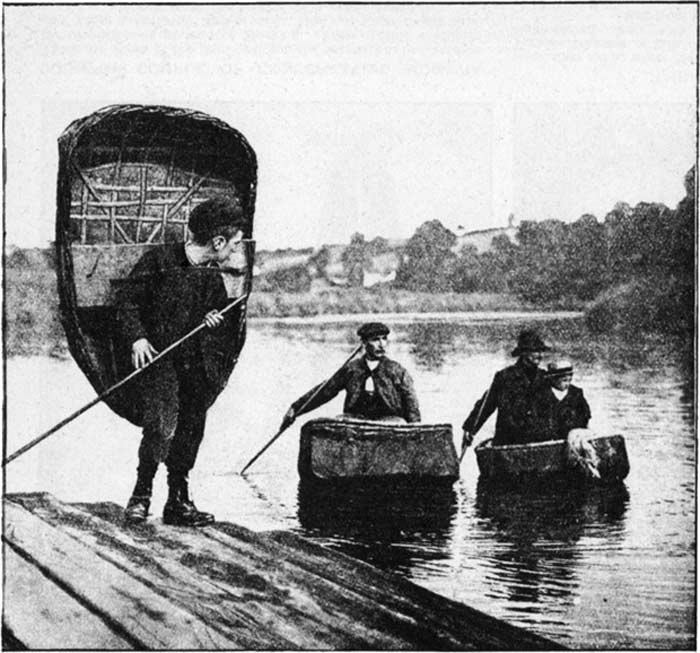
In 1974, Welshman Bernard Thomas crossed the English Channel in a traditional Welsh coracle — a tiny, lightweight boat that looks rather like a floating half of a walnut shell.
Thomas was attempting to demonstrate a theory about how the bull boats of the Mandan people of North America might have been influenced by the design of Welsh coracles. His journey from Wales to France took approximately 13½ hours.
Compared with a modern ferry, a coracle looks completely ridiculous for a Channel crossing. Compared with a bathtub, however, it suddenly starts to look like a sensible choice.
4 On the Wing of an Aircraft
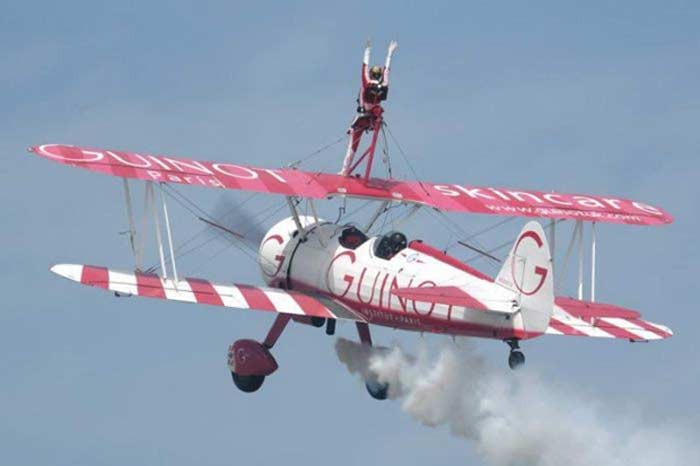
Some Channel crossings are difficult enough from inside an aircraft. Others involve climbing out onto the aircraft itself.
The original source for this story identifies London accountant Helen Campbell as having crossed the Channel on the wing of an aircraft in late 1969. The feat belongs to the era of spectacular aviation stunts, when “please remain seated” was apparently considered more of a suggestion than a rule.
The historical details of this particular crossing are difficult to verify from reliable modern archival sources, so the story is best treated as a reported stunt rather than a firmly documented world record.
5 A Pedal-Powered Airship
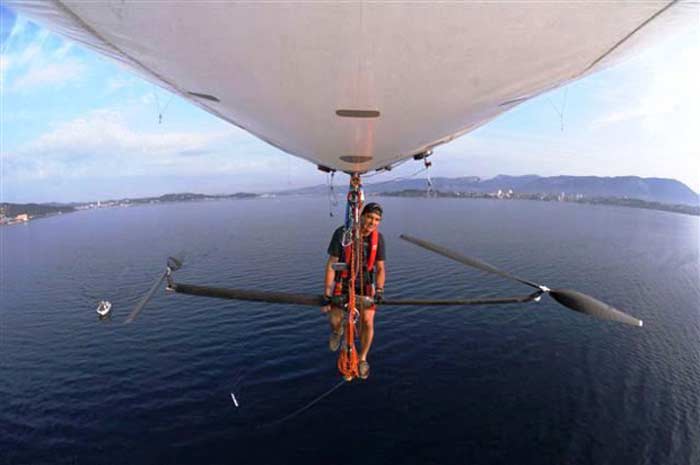
In September 2008, French adventurer Stéphane Rousson attempted to cross the Channel in one of the strangest aircraft ever designed for the job: a small pedal-powered airship.
His machine, known as Zeppy, combined a helium-filled envelope with propellers driven by pedals. Rousson managed to get several hours into the attempt, but changing winds eventually stopped the adventure. He was left hovering above the Channel while the wind pushed the airship in the wrong direction.
So technically this entry belongs in the “attempted crossing” category — but honestly, a pedal-powered airship deserves its place on the list anyway.
6 An Electric Airship
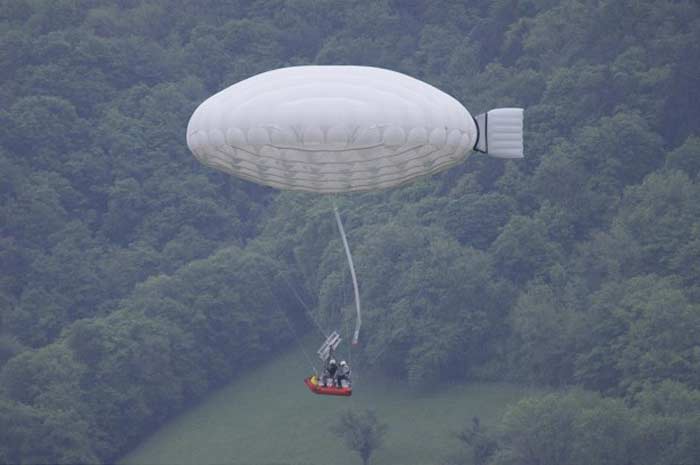
On September 4, 2013, French aviators Pierre Chabert and Gérard Feldzer successfully crossed the English Channel in the bizarre-looking Iris Challenger II, an electrically powered airship that looked like a cross between a flying saucer and a giant transparent fish.
The craft travelled roughly 45–48 km from Cap Gris-Nez in France to the English coast near Dymchurch/Folkestone. The crossing took about 2 hours and 23 minutes. It was officially described as a record for an electric-powered airship in its class.
The airship was powered by electric motors driving two propellers, with helium providing the lift. It was quiet, slow and completely unlike the conventional aircraft normally seen over the Channel.
7 A Cluster of Helium Balloons
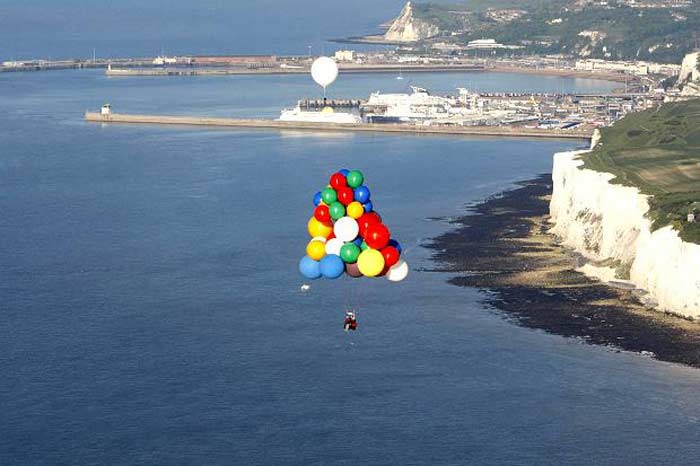
On May 28, 2010, American adventurer Jonathan Trappe crossed the English Channel suspended beneath a cluster of 55 helium-filled balloons.
Trappe launched from Kent and drifted toward France in a small seat beneath the balloons. The flight took around four hours, and he eventually landed in a field near Dunkirk. To control his altitude, he released ballast to rise and cut balloons loose to descend.
It sounds like something from an animated movie — except that Trappe was actually sitting beneath the balloons, several thousand feet above one of the world’s busiest shipping lanes.
8 An Amphibious Car
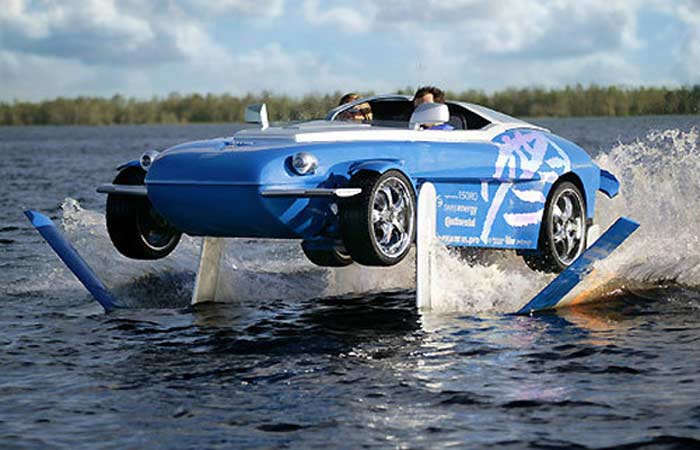
An amphibious car is already an unusual machine. An amphibious car with hydrofoils is something else entirely.
In 2004, Richard Branson crossed the Channel in a Gibbs Aquada, setting a new record for an amphibious vehicle with a time of 1 hour, 40 minutes and 6 seconds.
Two years later, Swiss designer Frank M. Rinderknecht took the idea even further with the Rinspeed Splash. Rather than simply floating like a boat, the Splash used retractable hydrofoils to lift its hull above the water. Rinderknecht crossed the Channel in 194 minutes, or about 3 hours 14 minutes.
So the original article had these two events in the wrong chronological relationship — Branson’s Aquada was the earlier crossing.
9 A Hovercraft
For decades, the hovercraft was one of the fastest ways to cross the Channel without taking to the air.
The SR.N4 hovercraft Swift was one of the famous machines operating between Britain and France. It entered service in 1969 and eventually made more than 30,000 cross-Channel journeys during its career.
The original article attributes a 24-minute 8-second crossing on September 1, 1984 to Swift. That specific record is difficult to verify from authoritative modern sources, so it is safer not to present it as the all-time hovercraft record.
The later fastest recorded commercial car-carrying hovercraft crossing was made by the SR.N4 Mk III *Princess Anne* in 22 minutes on September 14, 1995.
10 A Kiteboard

Crossing the Channel on a kiteboard is probably the closest thing on this list to voluntarily replacing a ferry ticket with an argument with the wind.
Kiteboarders have made numerous Channel crossings. Sir Richard Branson also crossed the Channel by kiteboard in 2012, travelling from Dymchurch in Kent to Wimereux in France in 3 hours 45 minutes. Guinness World Records lists this as the record for the oldest person to kiteboard across the English Channel, at age 61.
The original article’s claim that Branson himself set the official Channel kite record in 1999 is therefore misleading. The record category and individual achievements have changed over time.
And those aren’t even the strangest attempts…
The English Channel has seen plenty of other eccentric crossings and attempts. People have tried pedal-powered craft, unusual boats and experimental aircraft, while modern adventurers continue to look for increasingly imaginative ways to get from Britain to France.
And, of course, there is always the conventional solution: a ferry, a train through the Channel Tunnel, or a perfectly ordinary airplane.
But where would be the fun in that?