How many people spend the precious moments of their existence that they have been given in human form simply pursuing material goals, while the achievements of generations of scientists, researchers, and inventors continue to shape civilization? Earning money, buying food, fashionable clothes, an expensive car, a house or yacht, saving money, and enjoying luxurious vacations can occupy much of our lives, but they are not necessarily what drives humanity’s intellectual progress. The lives and work of extraordinary people are a reminder of a very different kind of achievement. Scientists, artists, and innovators can change the world, yet their work is sometimes recognized only after many years. Scientific discoveries, inventions, and achievements can continue to influence civilization long after their creators are gone.
Philanthropists and patrons have long understood that wealth can be used to support knowledge and human progress. To encourage talented researchers and preserve their legacy, they have established foundations, grants, and prizes. Here are 10 of the world’s best-known and most significant scientific awards.
1 Breakthrough Prize in Fundamental Physics
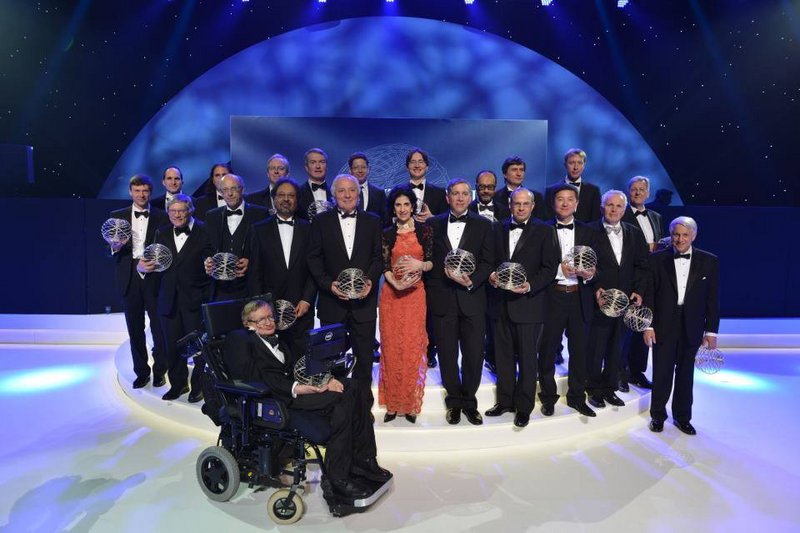
Founder – The Breakthrough Prize was launched in 2012 by a group of technology entrepreneurs and philanthropists.
Year founded – 2012.
Field – fundamental physics.
Prize amount – $3 million.
The Breakthrough Prize in Fundamental Physics was launched in 2012 and quickly became one of the world’s largest individual science prizes. The prize recognizes major achievements in fundamental physics, and the winner receives $3 million.
One of its unusual features is that nominations can be submitted online, and the award is not restricted by the age of the scientist. The selection is made by committees consisting of previous Breakthrough Prize laureates.
The prize is part of a broader family of Breakthrough Prizes covering fundamental physics, life sciences, and mathematics.
2 Breakthrough Prize in Life Sciences
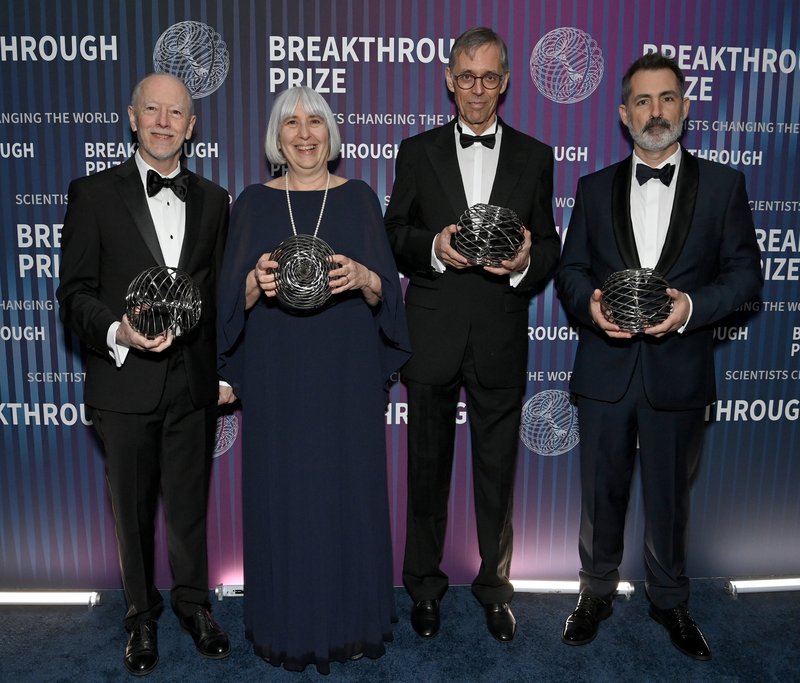
Founders – Sergey Brin, Priscilla Chan, Mark Zuckerberg, Yuri and Julia Milner, and other philanthropic partners.
Year founded – 2013.
Field – life sciences.
Prize amount – $3 million.
The Breakthrough Prize in Life Sciences was launched in 2013 to recognize major achievements in biomedical research, particularly research aimed at understanding disease and extending human life. Each winner receives $3 million.
The award was created with the idea that major medical problems require sustained efforts from many researchers. It also aims to raise the public profile of scientific discoveries and celebrate scientists as role models for future generations.
3 Breakthrough Prize in Mathematics
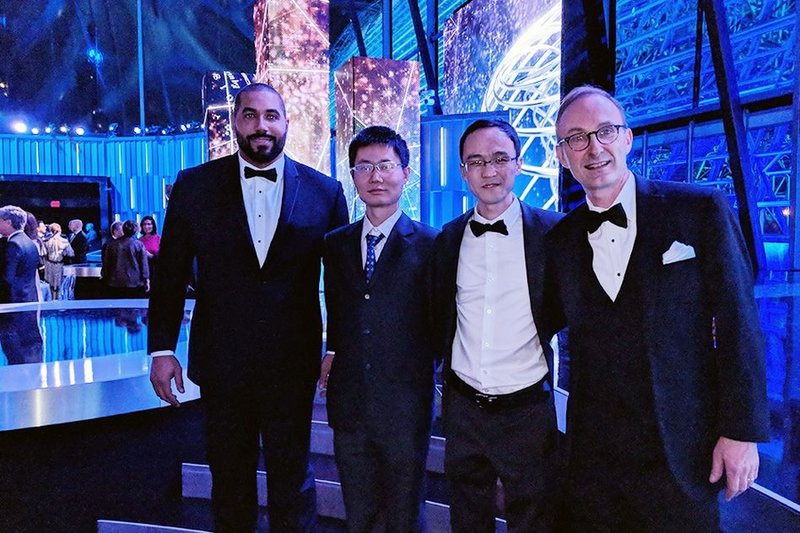
Founder – The Breakthrough Prize Foundation.
Year founded – 2013.
Field – mathematics.
Prize amount – $3 million.
The Breakthrough Prize in Mathematics is awarded annually for outstanding achievements in mathematics. The winner receives $3 million, making it one of the largest monetary awards in mathematics.
The prize was introduced in 2013 as part of the Breakthrough Prize family. Its purpose is to recognize mathematicians whose work has made a major contribution to the field and to give greater public visibility to mathematical achievement.
4 Nobel Prize
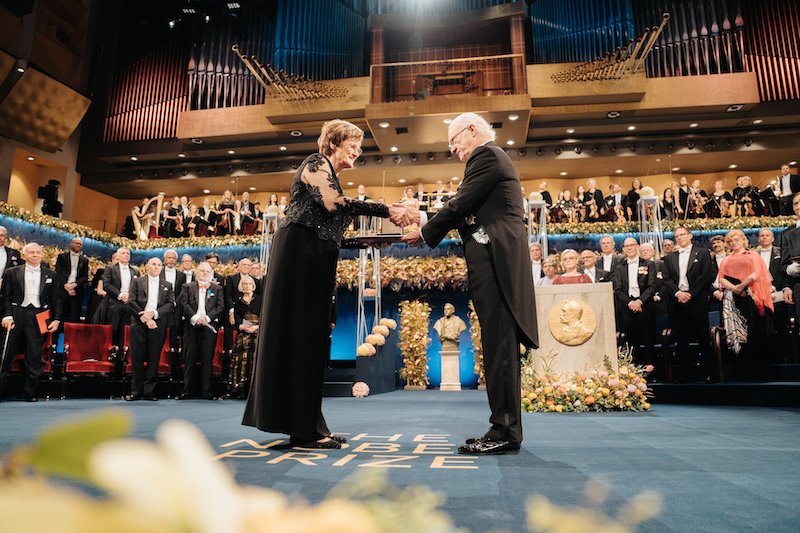
Founder – Alfred Nobel, inventor, engineer, chemist, and entrepreneur.
Year founded – 1901.
Fields – physics, chemistry, physiology or medicine, literature, and peace. The Sveriges Riksbank Prize in Economic Sciences in Memory of Alfred Nobel was established in 1968 and first awarded in 1969. There is no Nobel Prize in mathematics.
Prize amount – varies by year and is shared when a prize is divided among laureates.
The Nobel Prize is one of the world’s best-known scientific and cultural awards. Alfred Nobel’s will established prizes for achievements in physics, chemistry, physiology or medicine, literature, and peace. The first Nobel Prizes were awarded in 1901.
A prize may be shared by up to three individuals or organizations, depending on the category and circumstances. The Economic Sciences prize was added later and is technically a separate prize established by Sweden’s central bank.
The absence of a Nobel Prize in mathematics has sometimes inspired legends about Alfred Nobel’s personal reasons, including a story involving a mathematician and Nobel’s wife. However, there is no reliable historical evidence that such a personal rivalry was the reason mathematics was excluded.
Interestingly, the Nobel Prize was not the first scientific award. Earlier prizes, including the Demidov Prize in the Russian Empire, recognized scientific achievements, but they belonged to a different historical and institutional tradition.
5 Shaw Prize

Founder – The Shaw Prize Foundation.
Year founded – 2002.
Fields – astronomy, life science and medicine, mathematical sciences.
Prize amount – $1 million in each field.
The Shaw Prize was established in 2002 and has been awarded annually since 2004. It recognizes significant achievements in astronomy, life science and medicine, and mathematical sciences.
Each of the three prizes carries a monetary award of $1 million. The prize is open to scientists regardless of nationality, gender, race, or religious belief.
The Shaw Prize is sometimes described in the media as an “Asian Nobel Prize,” although this is an informal comparison rather than its official title.
6 Kavli Prize
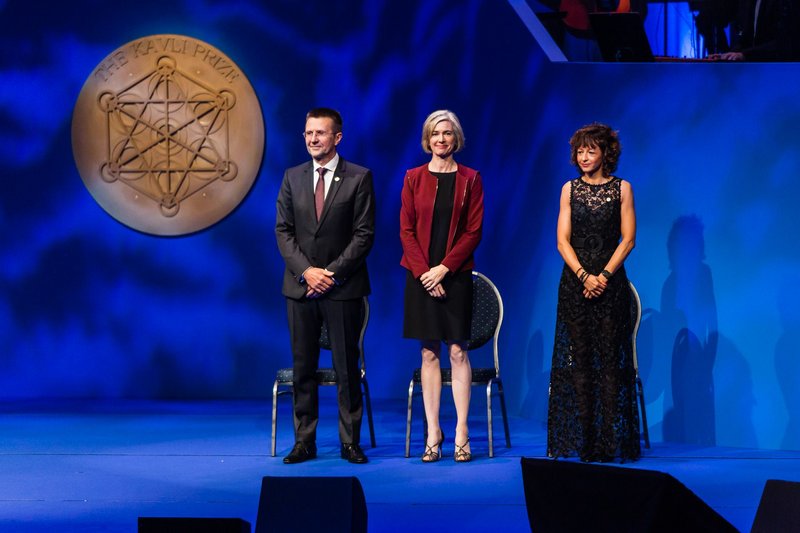
Founder – Fred Kavli, Norwegian-American entrepreneur and philanthropist, together with the Kavli Foundation and Norwegian scientific institutions.
Year founded – 2008.
Fields – astrophysics, nanoscience, neuroscience.
Prize amount – $1 million in each field.
The Kavli Prize has been awarded every two years since 2008. It recognizes major advances in three areas: astrophysics, nanoscience, and neuroscience.
Fred Kavli chose these fields because they represent three different scales of scientific inquiry: the largest, the smallest, and the most complex. Each of the three prizes carries $1 million.
The prizes are administered through a partnership involving the Norwegian Academy of Science and Letters, the Kavli Foundation, and the Norwegian Ministry of Education and Research.
7 Abel Prize
Founder – The Government of Norway.
Year founded – 2002.
Field – mathematics.
Prize amount – approximately $1 million, depending on the exchange rate.
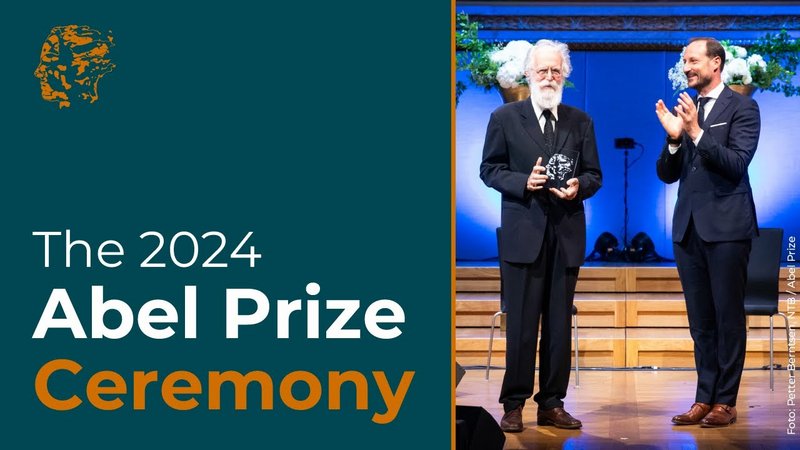
The Abel Prize is one of the world’s major awards for outstanding achievements in mathematics. It was established by the Norwegian government in 2002 and is named after the Norwegian mathematician Niels Henrik Abel, who died at the age of only 26.
The prize was partly inspired by the absence of mathematics from the Nobel Prizes. Unlike the Nobel Prizes, however, the Abel Prize is specifically dedicated to mathematics.
In 2015, the Abel Prize was awarded to John Forbes Nash Jr. and Louis Nirenberg for their work in nonlinear partial differential equations and related areas. Nash had already received the Nobel Prize in Economic Sciences in 1994 for his work in game theory.
Nash’s life was also the inspiration for the film “A Beautiful Mind,” which won four Academy Awards in 2002, including Best Picture. Nash himself did not receive an Oscar.
8 Charles Stark Draper Prize
Founder – National Academy of Engineering of the United States.
Year founded – 1989.
Field – engineering.
Prize amount – $500,000.
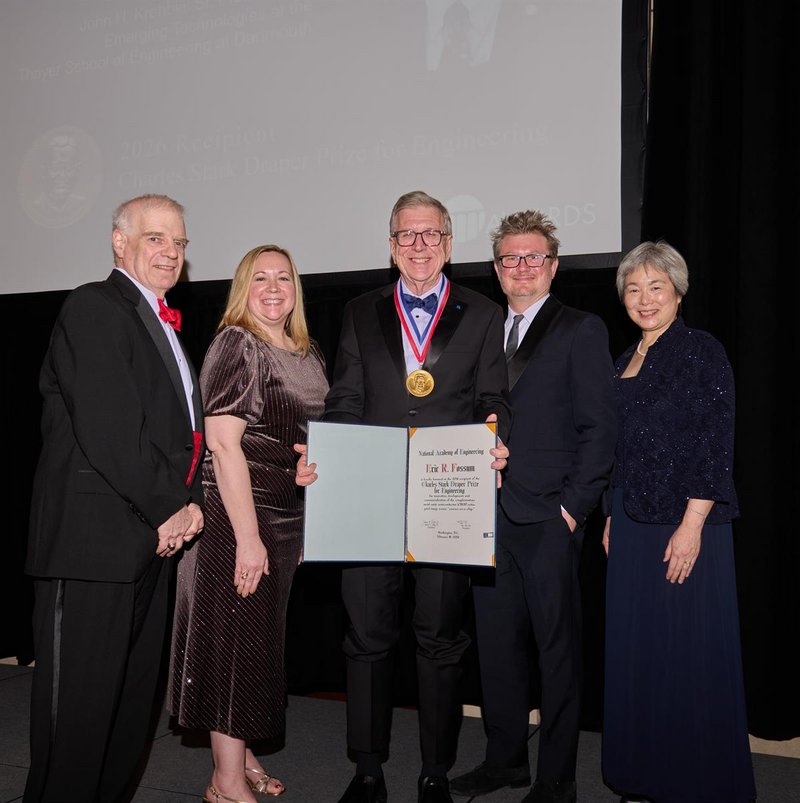
The Charles Stark Draper Prize recognizes engineers whose achievements have had a significant impact on society. It is named after Charles Stark Draper, an American engineer and inventor who made major contributions to inertial navigation.
Draper and his laboratory played an important role in the development of guidance and navigation technology. The Apollo Guidance Computer, developed by MIT’s Instrumentation Laboratory under Draper’s direction, was used in the Apollo spacecraft to help control navigation and guidance during lunar missions.
The prize recognizes major engineering achievements that have contributed to the advancement of society.
9 Lasker Awards
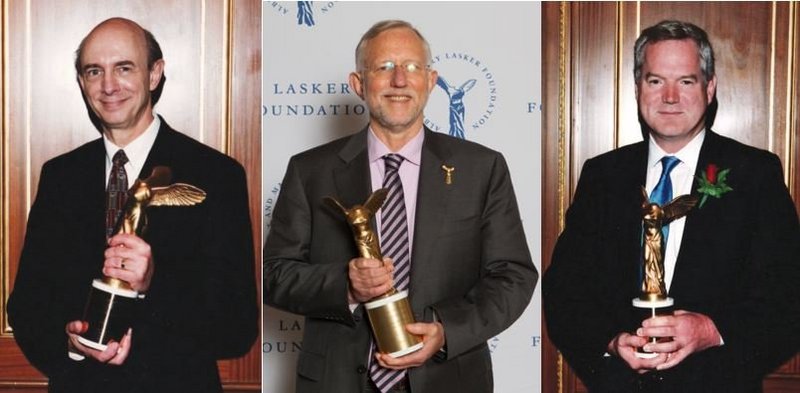
Founder – Albert and Mary Lasker.
Year founded – 1945.
Fields – biomedical research, clinical medical research, and public service.
Prize amount – varies by award category.
The Lasker Awards were created in 1945 by Albert and Mary Lasker to recognize major achievements in biomedical research and public health. The awards have played an important role in highlighting discoveries that have transformed medicine.
Today the program includes awards for basic medical research, clinical medical research, special achievement in medical science, and public service. The awards are selected by international juries of scientists and other experts.
The Lasker Awards have frequently recognized scientists who later received Nobel Prizes, making the awards an important part of the history of modern biomedical research.
10 Turing Award
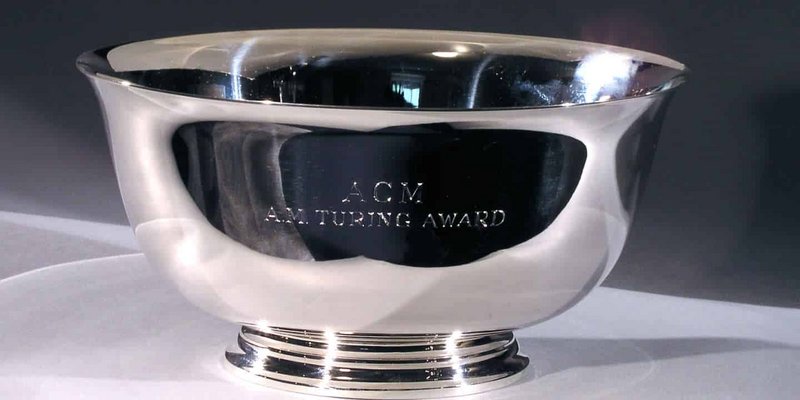
Founder – Association for Computing Machinery (ACM).
Year founded – 1966.
Field – computer science.
Prize amount – $1 million since 2014.
The ACM A.M. Turing Award is one of the most important international awards in computer science. It is named after Alan Turing, the British mathematician and computer scientist whose work laid important foundations for theoretical computer science and modern computing.
The award was established by the Association for Computing Machinery in 1966 and recognizes individuals who have made lasting and major technical contributions to computing. Since 2014, the prize has carried a $1 million award, funded by Google.
Alan Turing’s work on computability, cryptanalysis, and early computing had a profound influence on the development of computer science. His life was tragically cut short in 1954, when he died at the age of 41. His legacy, however, became increasingly recognized in the decades that followed.
For a non-specialist, it can be difficult to understand not only the discoveries recognized by these awards, but even the names of the fields in which scientists work. Perhaps this is one of the important roles of major international prizes: to draw public attention to discoveries that might otherwise remain known only within the scientific community.