Henry Ford’s contemporaries believed it might take a hundred years to determine whether he had helped or harmed humanity. There was no doubt about one thing: the American industrialist changed the world forever. There is little point in repeating the familiar story of a young mechanic who became a billionaire. But some interesting and instructive facts about the extraordinary life of Henry Ford are worth remembering.
1 Inventor
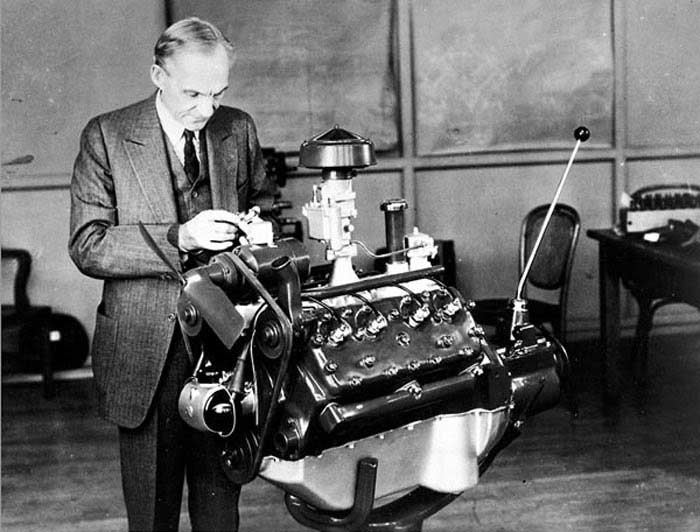
Henry Ford showed an interest in machinery from an early age. As a teenager, he repaired mechanical equipment and worked on farms, developing the practical skills that later shaped his career. He became a machinist’s apprentice in Detroit and went on to work as an engineer at the Edison Illuminating Company.
Ford was an inventor as well as an industrialist, and he received numerous patents related to automotive engineering and manufacturing. Claims that he personally built his first house or held exactly 161 patents should be treated cautiously unless supported by specific historical records.
2 Talent or genius?

Ford had unconventional ideas about life and human potential. He was interested in reincarnation and reportedly believed that knowledge and experience might carry over from one life to another. This belief is sometimes linked to his reflections on genius and the possibility of developing ideas over multiple lifetimes. However, popular quotations attributing a precise theory of genius to Ford are not always reliably sourced.
3 My Life and Work — the memoir of an industrial pioneer

In 1922, Henry Ford published My Life and Work, written with Samuel Crowther. The book described Ford’s approach to manufacturing, management, efficiency, and making automobiles affordable to ordinary people.
A few milestones illustrate the scale of his success:
October 1908 — Ford introduced the Model T, the car that would become synonymous with his company.
1913 — Ford’s factories pioneered the moving assembly line for automobile production, greatly increasing manufacturing efficiency.
1914 — The company introduced its famous five-dollar-a-day wage policy for qualifying workers, alongside a shorter working day.
By 1927, Ford had produced approximately 15 million Model T cars. The Model T helped transform personal transportation, although Ford’s company was not the only contributor to the growth of the automobile industry.
4 “Father of the nation” or tyrant?
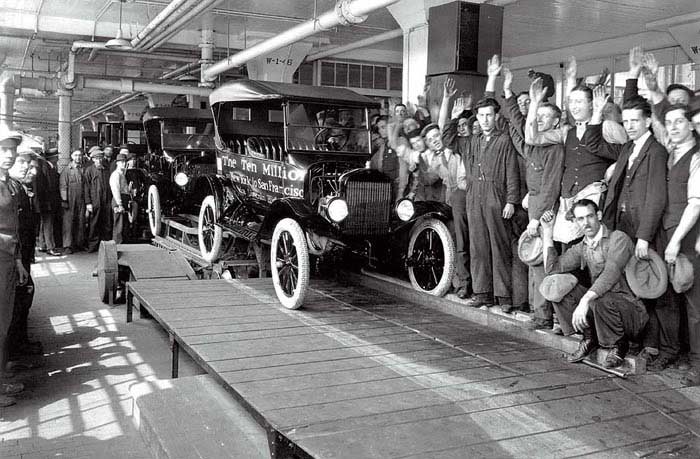
Ford introduced changes that improved conditions for many factory workers. In 1914, Ford Motor Company announced a minimum daily wage of five dollars for qualifying employees and reduced the standard working day at its Highland Park plant to eight hours. These policies helped make the company famous for relatively high wages and efficient production.
However, the benefits came with strict expectations. Ford’s Sociological Department investigated employees’ personal lives, including their finances, household conditions, drinking habits, and family circumstances. The company sought to ensure that workers followed Ford’s ideas about respectable behavior. This intrusive system made the company’s approach to employee welfare as controversial as it was influential.
5 “When everything seems to be going against you, remember that the airplane takes off against the wind”
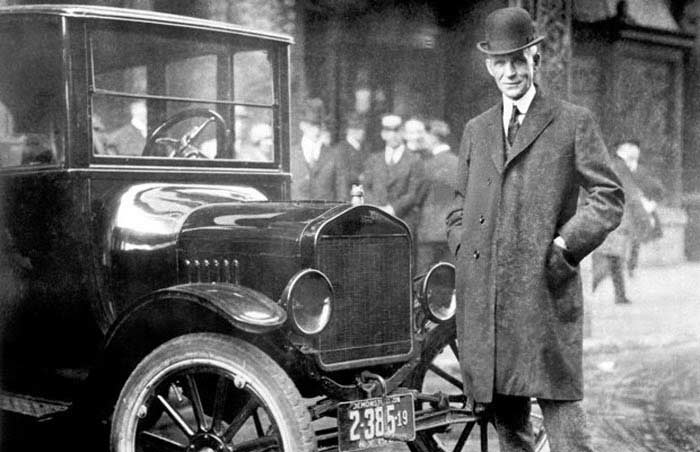
This popular motivational quotation is often attributed to Ford, although its original source is uncertain. It nevertheless fits the image of an industrialist who repeatedly challenged established business practices.
Ford helped make cars more affordable by improving production methods and reducing the price of the Model T over time. He also pursued interests beyond automobiles, including aviation and industrial research. His company produced the Ford Trimotor aircraft, while Ford himself supported ambitious engineering projects. Stories about his private relationships and lavish gifts to employees or associates circulate in popular biographies, but individual anecdotes should not be treated as established fact without reliable evidence.
6 The peace mission

During World War I, Ford became a prominent advocate of peace. In December 1915, he financed a voyage to Europe aboard the ocean liner Oscar II, accompanied by peace activists who hoped to encourage negotiations between the warring nations. The expedition became known as the Peace Ship.
The mission attracted widespread publicity but failed to bring the war to an end. Newspapers mocked the initiative, and Ford eventually left the expedition. Despite his pacifist views, his later industrial operations became deeply involved in military production during World War II.
7 Ford and the gangsters

One of the most famous stories connecting Ford’s cars with American gangsters involves Clyde Barrow, the criminal who became notorious alongside Bonnie Parker during the Great Depression.
In 1934, Barrow reportedly wrote to Ford praising the company’s V-8 automobile for its speed and performance. The letter is often quoted as an example of how even criminals appreciated Ford’s engineering. The story is frequently retold as an amusing piece of unintended publicity, although it should not be taken as evidence that Ford maintained a close relationship with organized crime or deliberately used a gangster’s death to promote his cars.
8 Antisemite and Hitler admirer
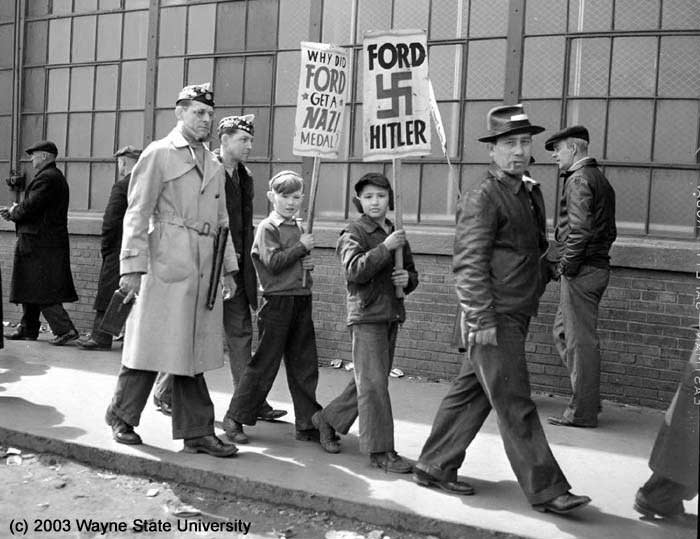
One of the darkest aspects of Ford’s legacy was his antisemitism. In 1920, his newspaper, The Dearborn Independent, began publishing a series of articles promoting false antisemitic conspiracy theories. These articles were later collected as The International Jew and circulated internationally.
Adolf Hitler and other Nazi leaders admired Ford’s antisemitic views. Hitler praised him in Mein Kampf and displayed a portrait of the American industrialist in his office. In 1938, Ford received the Grand Cross of the German Eagle, an honor awarded by Nazi Germany to prominent foreign figures.
Ford later issued an apology for the antisemitic campaign associated with his newspaper. His industrial achievements do not erase the harm caused by his promotion of hatred and conspiracy theories.
9 Women and family
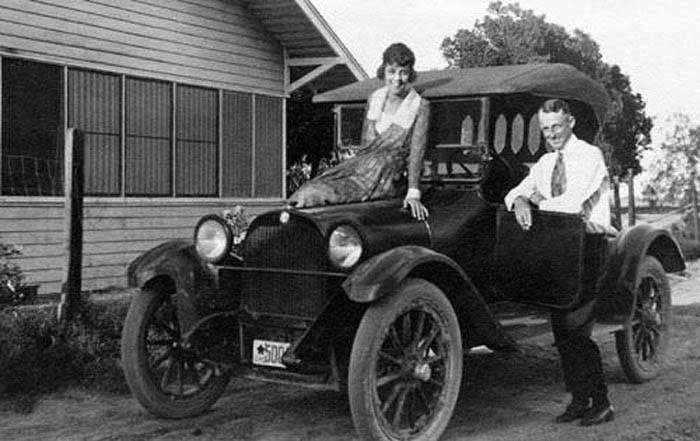
Henry Ford married Clara Bryant in 1888, and they remained married until his death. Clara supported his work through the many changes and challenges of his career. Their only child, Edsel Ford, later became president of Ford Motor Company and played a major role in its development.
Stories about Ford’s alleged relationships with other women, including a young secretary named Evangeline, have appeared in popular accounts. However, claims about an alleged child or extravagant gifts should not be presented as established facts without strong evidence.
Ford’s own attitudes toward women reflected the conventions and prejudices of his time, while employment practices at his factories often restricted women’s opportunities. His legacy in industry was therefore not one of equal opportunity for all workers.
10 A difficult final chapter
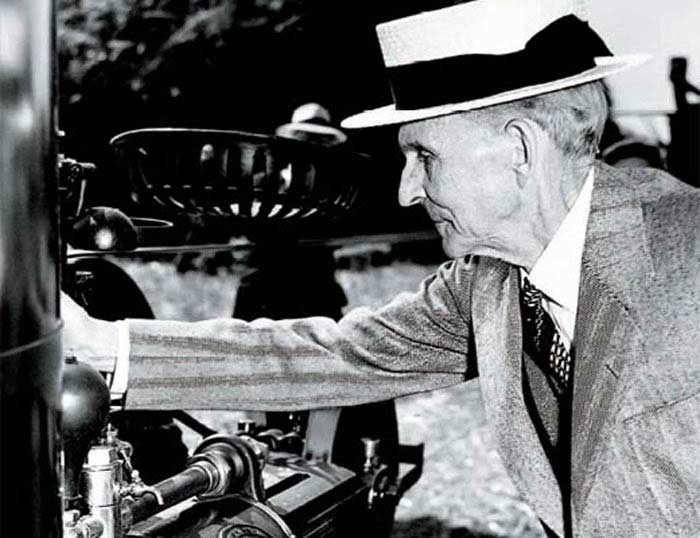
Henry Ford’s later years were marked by declining health and growing concern about the future of his company. His son Edsel died of cancer in 1943, a devastating personal loss. Henry Ford returned to the company’s presidency during the final years of World War II but eventually stepped down in 1945, handing leadership to his grandson Henry Ford II.
Henry Ford died of a cerebral hemorrhage on April 7, 1947, at the age of 83. He left behind an industrial empire that had transformed automobile manufacturing and helped reshape modern life.
Estimates of Ford’s personal fortune vary depending on how wealth is calculated and adjusted for inflation. Comparisons claiming that his fortune would have been worth a specific amount in today’s dollars are therefore estimates, not precise historical figures. Ford Motor Company continues to operate as a global automaker, but its present-day workforce, finances, and ownership structure are different from those of Ford’s lifetime.