Spain has one of Europe’s most extensive high-speed railway networks, connecting major cities with modern trains travelling at speeds of up to 300 km/h. However, the country’s railway history also includes several devastating accidents that have claimed hundreds of lives.
The tragedies have had different causes: excessive speed, signalling failures, collisions between trains, track defects and dangerous level crossings. Some were the result of human mistakes, while others exposed weaknesses in railway infrastructure and safety systems.
Preventing similar disasters requires more than simply improving train technology. Railway operators need regular and independent inspections of tracks, switches and rail joints, reliable signalling systems with automatic emergency braking, and effective monitoring of trains to prevent collisions. Level crossings should be eliminated wherever possible, while railway staff must have adequate training, manageable workloads and clear emergency procedures.
The following ten disasters illustrate why railway safety must remain a constant priority. Each accident also provides important lessons that can help prevent future tragedies.
1 El Cuervo train collision, 1972
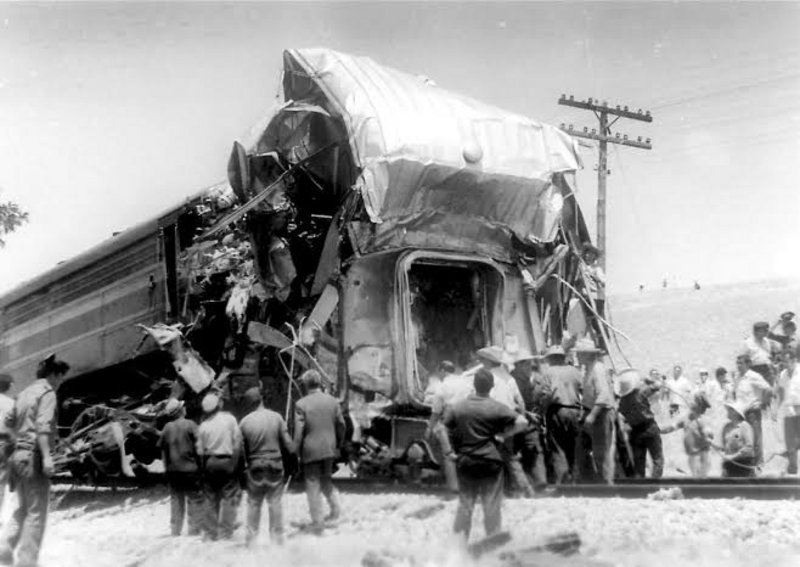
On July 21, 1972, two passenger trains collided head-on near El Cuervo, between Cádiz and Seville. The disaster killed 86 people and injured more than 150.
According to the investigation conducted by the state railway operator Renfe, one train driver failed to stop at a red signal at El Cuervo station and entered a section of track already occupied by an approaching train. The collision demonstrated the devastating consequences of signalling and operational failures.
Following the accident, improvements were made to railway signalling and automatic warning and braking systems.
2 Angrois train derailment, 2013
On July 24, 2013, an Alvia passenger train travelling from Madrid to Ferrol derailed at the Angrois curve near Santiago de Compostela. Eighty people died and more than 140 were injured.
The train entered the curve at approximately 191 km/h, despite a speed limit of 80 km/h. The driver had been distracted by a telephone call shortly before the accident. The absence of an operational automatic speed-control system capable of preventing the train from entering the curve too fast was also a major safety issue.
The disaster led to extensive public debate about railway safety, driver responsibility and the importance of automatic protection systems.
3 Torre del Bierzo railway disaster, 1944
On January 3, 1944, three trains were involved in a catastrophic collision inside a railway tunnel near Torre del Bierzo in León province. A passenger train suffered brake failure and collided with a locomotive. A third train then entered the tunnel and struck the wreckage.
The official death toll was 78, although historical estimates suggest that the actual number could have been considerably higher. The disaster occurred during the Franco dictatorship, when information about major accidents was heavily restricted.
4 Urda high-speed train collision, 2026
On October 28, 2026, a Renfe AVE train collided with the rear of a stationary Iryo train near Urda in Toledo province. At least 69 people died and dozens were injured, making it one of the deadliest railway disasters in modern Spanish history.
Preliminary information indicated that a failure of the LZB train safety system forced railway controllers to manage traffic manually. A Renfe train was reportedly authorised to resume normal speed while the Iryo train remained stopped ahead. The collision is under investigation, and the precise chain of responsibility has not yet been established.
5 Adamuz high-speed train disaster, 2026

On January 18, 2026, an Iryo high-speed train travelling from Málaga to Madrid derailed near Adamuz in Córdoba province. Its carriages crossed onto the neighbouring track and collided with an approaching Renfe Alvia train travelling towards Huelva. Forty-six people died and more than 120 were injured.
Investigators identified a broken rail joint at the derailment site. A later Guardia Civil report pointed to a possible failure of a weld joining two sections of rail manufactured decades apart. Material fatigue was also identified as a possible contributing factor. The investigation examined whether deterioration of the railway infrastructure caused the initial derailment.
6 Chinchilla collision, 2003
On June 3, 2003, a passenger Talgo train travelling from Madrid towards Cartagena collided head-on with a freight train near Chinchilla de Montearagón in Albacete province. Both trains were travelling in opposite directions on a single-track railway section. Nineteen people died and 38 were injured. The accident exposed serious weaknesses in the procedures used to authorise train movements and prevent conflicting routes.
7 Uharte-Arakil derailment, 1997
On March 31, 1997, the Intercity train Miguel de Unamuno derailed at Uharte-Arakil in northern Spain while travelling between Barcelona and Irún. Eighteen people died and more than 100 were injured. The train entered a track switch at approximately 137 km/h, although the permitted speed was only 30 km/h. The excessive speed caused several carriages to derail and overturn.
8 Castelldefels railway disaster, 2010
On June 23, 2010, during the traditional Saint John’s Eve celebrations, a group of people got off a commuter train at Castelldefels station near Barcelona and attempted to cross the railway tracks to reach the beach. A passing Alaris train struck them, killing 12 people and injuring others. The victims had not used the station’s underground pedestrian passage.
9 Lorca level-crossing disaster, 2001
On January 3, 2001, a commuter train collided with a van carrying agricultural workers at an unprotected level crossing near Lorca, Murcia. Twelve people died in the accident. The van was carrying 14 people, considerably more than its authorised capacity. The tragedy highlighted the dangers of unprotected railway crossings and the importance of separating road and rail traffic.
10O Porriño derailment, 2016
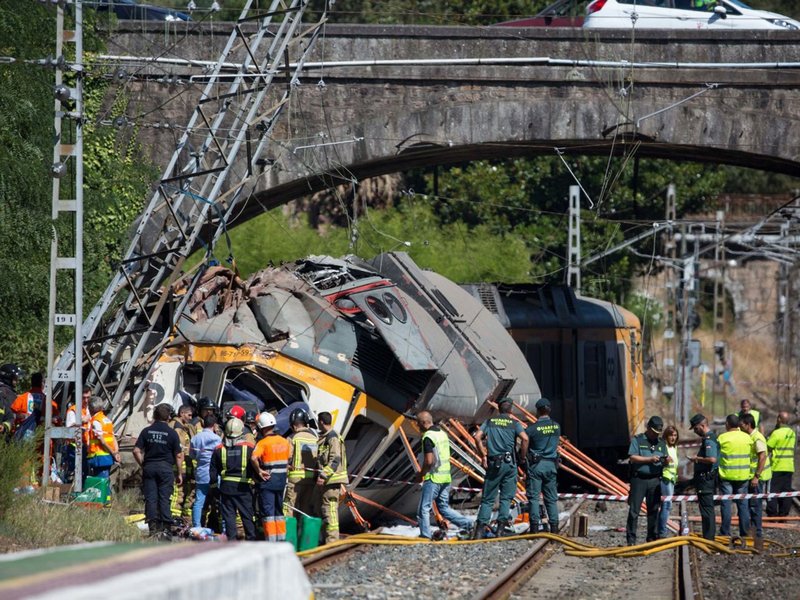
On September 9, 2016, a passenger train travelling from Vigo in Spain to Porto in Portugal derailed near O Porriño in Galicia. Four people died and approximately 50 were injured. The train was travelling at around 118 km/h when it entered a secondary track with a speed limit of just 30 km/h. The excessive speed during the manoeuvre caused the derailment.